
Lagos is turning its mounting waste burden into an emerging business opportunity, with the state’s waste management authority estimating that a shift towards recycling and reuse could unlock as much as $2.5 billion annually.
The figure, disclosed by Lagos State Waste Management Authority (LAWMA) Managing Director Muyiwa Gbadegesin, is an estimate of the economic value that could be created if a much larger share of discarded materials were recovered and returned to productive use. It should not be interpreted as current annual revenue from recycling.
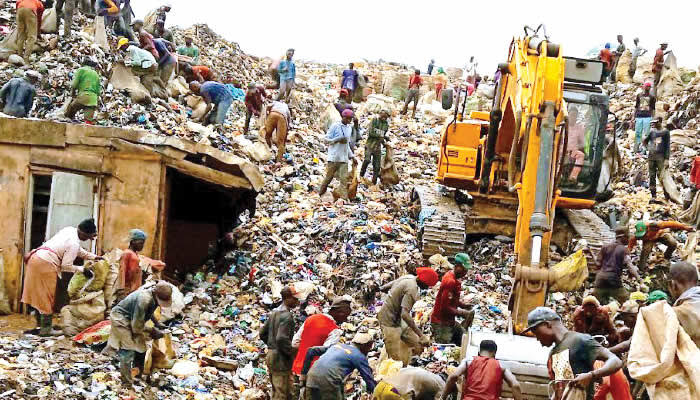
Lagos currently generates between 13,000 and 15,000 tonnes of waste daily, according to recent LAWMA statements. The scale has intensified pressure on the state’s collection and disposal infrastructure while creating room for private operators to build businesses around recycling, aggregation and waste processing.
The opportunity is attracting technology-driven businesses. Pakam Technology, for example, operates an app-based collection model that allows households to schedule pickups of recyclable materials. The company says more than 18,000 people have used the platform and that it has recovered more than 170,000 metric tonnes of recyclable waste since launching its programme in 2021.
Other operators are targeting specific parts of the value chain. Kaltani combines collection networks with sorting and processing, while Wecyclers uses household incentives and low-cost collection infrastructure to increase recycling participation. Wecyclers says it has reached more than 20,000 households.
The commercial logic is straightforward: recyclable materials such as plastics, aluminium, paper and cardboard have resale value, while manufacturers need reliable supplies of recovered materials.
Government policy is also pushing the sector towards formalisation. Nigeria’s National Policy on Plastic Waste Management promotes reduction, reuse, recycling and recovery, while implementation guidelines call for improved collection and diversion of plastic waste from dumpsites.
LAWMA is simultaneously developing transfer-loading stations and material-recovery infrastructure as it seeks to modernise Lagos’s ageing disposal system. Recent plans include new facilities at Olusosun and Solous III, with each proposed transfer station expected to handle about 2,500 tonnes daily.
The opportunity, however, is constrained by weak waste segregation, collection costs, limited processing capacity and inconsistent enforcement. Recycling companies also depend heavily on informal waste collectors, whose work remains poorly protected.
For investors, the central question is therefore not whether Lagos has enough waste. It does. The challenge is whether businesses can build reliable systems to collect, sort, process and sell that waste profitably at scale.
If Lagos can close those gaps, its waste problem could become an important source of jobs, industrial feedstock and private-sector investment rather than simply an environmental liability.