
The Government of Japan has provided a grant of about ¥587 million ($3.5 million) to strengthen Nigeria’s rice seed production system and improve the capacity of the National Cereals Research Institute (NCRI), Badeggi, Niger State.
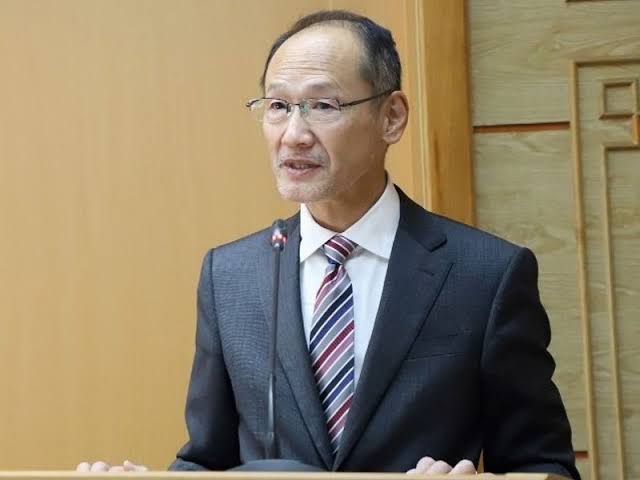
Japanese Ambassador to Nigeria, Hideo Suzuki, disclosed this at the handover ceremony for the Project for the Enhancement of Rice Seeds Production System at the NCRI headquarters in Badeggi, Katcha Local Government Area of Niger State.
Suzuki said the project would strengthen NCRI’s capacity to produce high-quality breeder and foundation rice seeds, which are essential inputs for the production of quality certified seeds for farmers.
He said improved access to quality planting materials could help raise farm productivity and strengthen confidence in Nigeria’s seed system, noting that good seed was fundamental to achieving better agricultural outcomes.
The project is being implemented with the support of the Japan International Cooperation Agency (JICA) and is aligned with Nigeria’s Second National Rice Development Strategy (2020–2030), which targets a doubling of domestic rice production by 2030.
Under the intervention, equipment provided to NCRI includes 20 medium-sized tractors, three rice transplanters, four small combine harvesters and two excavators for seed cultivation and production.
The project also includes four constant-temperature germination testers, three automatic weather observation systems and seven small flat-bed drying machines, alongside other equipment and support for technical capacity development and maintenance.
The equipment has been deployed at NCRI facilities, including its headquarters in Badeggi and designated outstations, to improve the efficiency and quality of rice seed production.
Minister of State for Agriculture and Food Security, Aliyu Sabi Abdullahi, commended Japan and JICA for their continued support for Nigeria’s agricultural development. He said the intervention would help address important gaps in rice seed production and mechanisation.
A JICA representative, Ishigame, said Japan’s cooperation in Nigeria’s rice sector had expanded over time to include production, post-harvest management, marketing, agricultural extension, institutional strengthening and policy support.
The latest intervention adds to JICA’s broader support for Nigeria’s rice sector, including separate capacity-development initiatives focused on strengthening institutions and stakeholders involved in rice seed production and quality control.
The project is expected to improve NCRI’s ability to produce higher-quality early-generation rice seed, supporting the wider seed multiplication system and, ultimately, efforts to increase rice productivity in Nigeria.
JICA’s project documentation identifies the strengthening of NCRI’s rice seed multiplication system through improved facilities and agricultural machinery as a central objective of its cooperation with Nigeria.