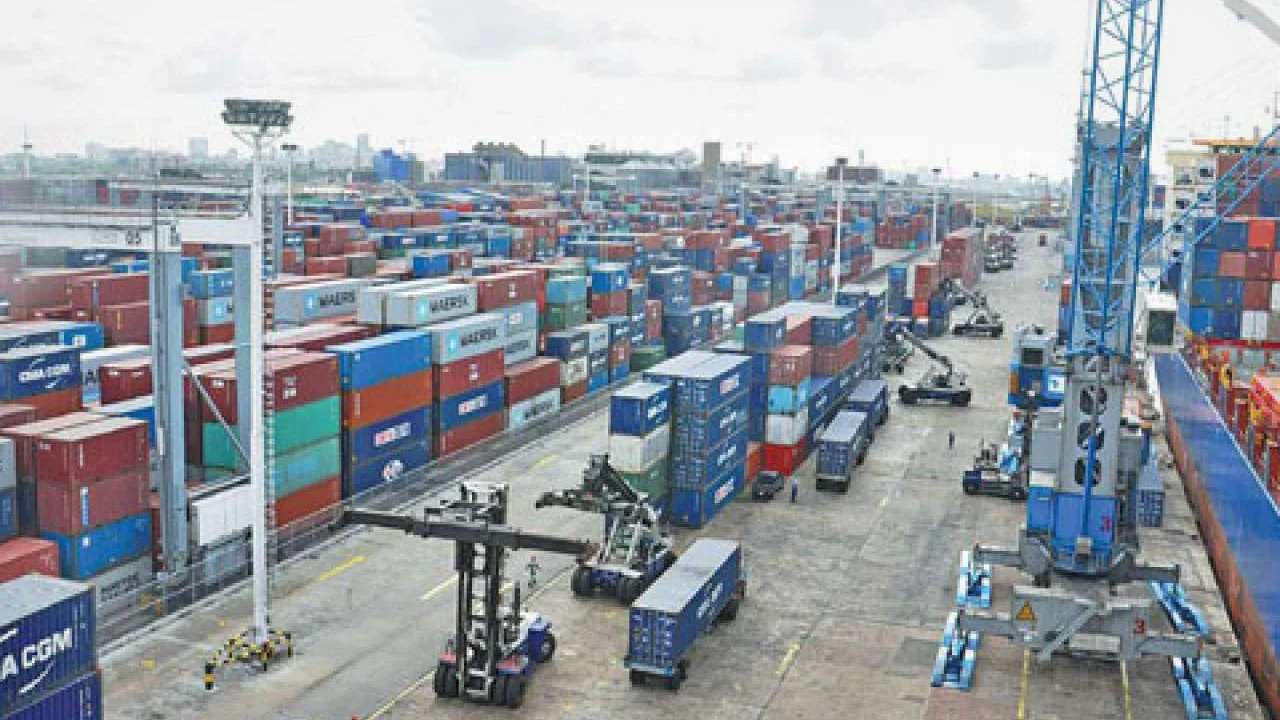

Nigeria’s busiest seaports are still facing congestion and cargo-evacuation challenges that add to the cost and uncertainty of moving imported goods, with the effects ultimately feeding into supply chains and consumer prices.
The pressure is particularly pronounced around the Lagos port corridor, where Apapa and Tin Can Island handle more than 70 per cent of Nigeria’s imports and exports, according to recent reports on the government’s planned upgrade of the two facilities.
The cost of delay can be significant. Importers may incur demurrage and storage charges when containers remain at terminals beyond their agreed free periods, although the rates vary by shipping line, terminal, container type and contractual terms. These charges can accumulate alongside customs, terminal and haulage costs, increasing the landed cost of imported goods.
Road access remains a major part of the problem. The Nigerian Ports Authority introduced the Electronic Truck Call-Up System, known as ETO, to regulate truck movements and reduce congestion on the Apapa and Tin Can corridors. However, industry stakeholders say some approved transit parks and pre-gates remain underutilised, while enforcement gaps allow some operators to bypass established procedures.
The NPA has continued to tighten traffic management. In July, it introduced a 72-hour threshold for trucks moving from designated pre-gates into assigned terminals at Tin Can Island Port, with the authority saying the measure was intended to improve port access and accelerate cargo evacuation.
The federal government is also pursuing longer-term reforms, including port modernisation and the National Single Window, designed to simplify and digitise trade procedures. The Nigeria Customs Service’s Time Release Study has likewise highlighted cargo dwell time and clearance processes as important areas for improvement.
The challenge, therefore, is not simply the time a ship spends at anchor. Delays can arise across the chain, from documentation and customs processing to terminal handling, truck availability and road access.
Until those bottlenecks are addressed together, importers will continue to face higher logistics costs and greater uncertainty, leaving Nigerian businesses and consumers to absorb at least part of the price of inefficiency at the country’s principal maritime gateway.