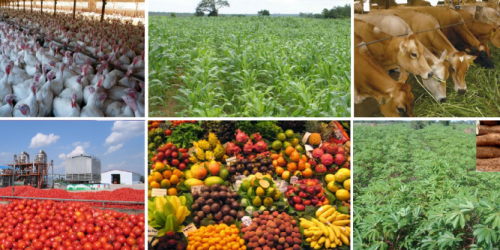

Nigeria’s agricultural sector recorded a trade surplus of about ₦344.7 billion in the first quarter of 2026, according to data from the National Bureau of Statistics (NBS). While the result may appear to signal an improvement in the country’s agricultural trade position, the underlying figures point to a more fragile picture.
The NBS reported that agricultural goods exports stood at ₦1.17 trillion in Q1 2026, down 31.2 percent from ₦1.70 trillion in the same quarter of 2025 and 11.39 percent from ₦1.32 trillion in Q4 2025. Agricultural imports, meanwhile, fell to ₦827.72 billion, declining 20.09 percent year-on-year and 42.39 percent from ₦1.44 trillion in the preceding quarter.
The result was a surplus of roughly ₦344.7 billion. But the numbers show that the surplus was driven largely by a sharper contraction in imports rather than an expansion in agricultural exports.
That distinction matters. A sustained improvement in Nigeria’s agricultural trade position would ideally be supported by rising export volumes or values, broader product diversification and stronger access to international markets. Instead, export earnings declined substantially during the quarter.
Cocoa remained the dominant agricultural export, with superior-quality cocoa beans generating ₦596.90 billion. Other major exports included sesame seeds at ₦153.78 billion, soya beans at ₦129.27 billion and cashew nuts in shell at ₦119.76 billion.
The sharp decline in imports could reflect several factors, including weaker import demand, changes in prices, exchange-rate conditions or increased reliance on domestic supply. However, the NBS data alone do not establish which of these factors was primarily responsible.
The Q1 figures therefore offer a mixed signal rather than clear evidence of an agricultural export recovery. The key test in subsequent quarters will be whether export values begin to recover and whether the sector can maintain a trade surplus without relying primarily on a continued contraction in imports.
For now, Nigeria has achieved an agricultural trade surplus, but the export side of the equation remains the bigger concern.