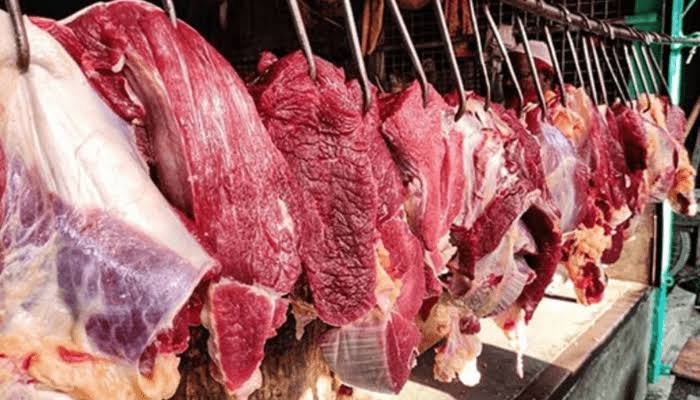

Meat has become a luxury in many Nigerian homes. A kilogram of beef now trades between ₦4,500 and ₦8,000 depending on the market, goat meat runs as high as ₦10,000, and a crate of eggs that sold for under ₦2,000 not long ago now costs upward of ₦6,000 in several cities. For a growing share of households, protein has quietly slipped out of reach.
Nigeria’s poultry and livestock sectors run almost entirely on imported or FX-exposed inputs, maize, soybean meal, premixes and veterinary drugs. When the naira weakens or maize supply tightens, feed costs rise immediately, and farmers pass that straight through to the price of eggs, chicken and, indirectly, beef and fish as substitute demand shifts. Industry figures note that Nigeria’s poultry sector, one of Africa’s largest, remains structurally fragile precisely because its input costs are so tightly linked to currency and inflation swings.
Food in Nigeria moves almost entirely by road, from cattle routes and fish ponds in the north and Niger Delta to markets in Lagos, Abuja and Port Harcourt. Petrol prices climbed sharply in March 2026, reportedly ranging from ₦900 to over ₦1,250 a litre depending on location, and that cost is baked into every truckload of livestock, frozen fish and eggs that reaches the city. Traders have little choice but to pass it on.
Headline inflation has actually been easing, it dropped to 15.91% in June 2026 from 15.93% in May, according to the National Bureau of Statistics. But food inflation moved the opposite way, quickening to 17.52% year-on-year in June, the fifth straight month of acceleration. Beef was among the specific items the NBS flagged as pushing prices higher, alongside staples like garri, yam and tomatoes. State-level data shows just how uneven the pain is: food inflation hit 53% in Kogi and over 40% in Niger and Benue, ironically, one of Nigeria’s main food-producing states.
The shift shows up clearly at the household level. Families that once bought beef or chicken are turning to eggs; those priced out of eggs are turning to ponmo (cowhide) or cheaper frozen fish. Nutritionists warn this is producing a “hidden hunger” problem, people eating enough to feel full while falling short on the protein needed for healthy growth, particularly in children’s.
The federal government has floated a 10-pillar livestock transformation plan aiming to grow the sector from roughly $32 billion to $74 billion in value, which would in theory expand local feed and protein supply over time. In the shorter term, relief depends more on fuel prices stabilising and the naira holding steady than on any single policy intervention, both of which remain uncertain heading into the rest of 2026.