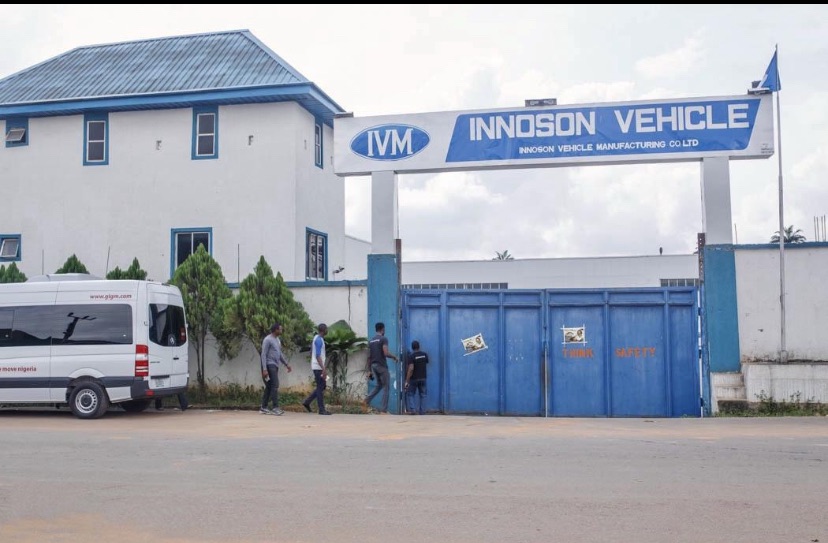

Nigeria’s transition to cleaner transportation has received fresh support as former senator and businessman Ben Murray-Bruce called on Innoson Vehicle Manufacturing (IVM) to make electric vehicles the centrepiece of its business strategy.
In a message shared on social media, Murray-Bruce praised the founder of Innoson Vehicle Manufacturing, Chief Innocent Chukwuma, for building Nigeria’s leading indigenous automobile company and proving that locally made vehicles can compete in the market.
He said Innoson had achieved what many believed was impossible by establishing a successful automobile manufacturing company in Nnewi, Anambra State. Murray-Bruce also revealed that he proudly drives an Innoson vehicle, describing it as a symbol of Nigerian innovation and determination.
While acknowledging the company’s recent progress in electric mobility, including the launch of its EX02 electric vehicle and expansion of its manufacturing facilities, the former lawmaker encouraged the company to go even further.
According to him, electric vehicles should become Innoson’s main business focus rather than a small part of its operations.
Murray-Bruce believes Nigeria has the resources and economic conditions needed to embrace electric mobility. He pointed to the rising cost of petrol, which now sells for over ₦1,300 per litre, saying many families would benefit from vehicles powered by electricity, especially when combined with solar energy.
He explained that electric vehicles cost less to maintain because they contain fewer moving mechanical parts than conventional petrol-powered cars. Lower maintenance costs, he said, would reduce transportation expenses for motorists while helping the country cut its dependence on imported fuel.
The businessman also highlighted the potential economic benefits for Nigeria. By producing more electric vehicles locally, the country could reduce pressure on foreign exchange used to import fuel while creating new opportunities in manufacturing, technology and clean energy.
Another advantage, he noted, is Nigeria’s rich lithium deposits, particularly in Nasarawa State. Lithium is a key raw material used in manufacturing electric vehicle batteries, giving Nigeria an opportunity to become an important player in the growing global electric vehicle industry.
Murray-Bruce also referenced international trends that show the rapid shift toward electric transportation. He said one out of every four new vehicles sold globally last year was electric, while more than half of all new cars purchased in China are now powered by electricity. He further pointed to Ethiopia’s decision to stop importing petrol-powered vehicles as an example of how countries are embracing cleaner transport solutions.
According to him, the world is moving quickly toward electric mobility, and Nigeria should not miss the opportunity to participate in this transformation.
He expressed confidence that Innoson, as Nigeria’s leading indigenous vehicle manufacturer, is well positioned to lead the country’s transition and become a major force in Africa’s electric vehicle market.
His comments have sparked fresh discussions about Nigeria’s readiness for electric vehicles, the need for charging infrastructure and supportive government policies, as well as the important role local manufacturers can play in building a cleaner and more sustainable transport system for the future.