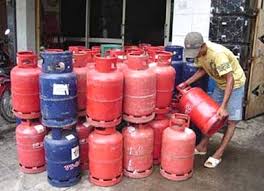

As the cost of liquefied petroleum gas nearly triples in some cities, households and small businesses are forced to make hard choices, threatening both Nigeria’s clean energy goals and the average citizen’s pocket.
The price of cooking gas in Nigeria has climbed to record levels, leaving millions of families struggling to afford a basic necessity and forcing many to abandon gas entirely. The surge, which has seen rates hit as high as N3,000 per kilogram in parts of Lagos earlier this month, is deepening economic hardship and threatening to derail the government’s clean energy transition plan.
In Abuja and its suburbs, a 12.5kg gas cylinder now costs between N15,000 and N16,500, up from around N10,000 barely two months ago. Prices at depots and filling stations vary wildly, with some outlets charging as high as N1,600 per kilogram.
Lagos residents have fared only slightly better, paying between N1,100 and N1,500 per kilogram after a brief dip from the earlier highs of N2,500 to N3,000.
Families Counting the Cost
For many low and middle-income households, the cost of gas now takes up a painful share of monthly income. Food vendors and small restaurant owners, who depend heavily on gas for daily operations, say the situation is becoming unbearable.
“I tried to return to using charcoal, but even that is becoming expensive,” said Blessing Ogar, a food vendor in Mararaba, on the outskirts of Abuja. Another vendor, Esther from Gwarimpa, said she paid N18,125 to refill her cylinder last week. “If I raise my food prices, customers will leave. If I don’t, I’ll run at a loss. Either way, I’m trapped,” she said.
For salaried workers, the story is no different. Musa Abdul, a civil servant living in Nyanya, recalled paying N8,500 for a refill last year. “Now it’s N15,000. It’s ridiculous. We’re cooking less these days just to save gas,” he said.
The knock-on effect is evident at the local markets, where rising cooking costs have pushed up food prices. A bowl of rice or beans at roadside eateries now sells for 20 to 30 per cent more than it did in August. For many urban families, cooking gas has turned from a convenience into a luxury.
Retailers Pass the Blame
Retailers insist they are not profiteering. “We sell what we buy,” said John Okafor, a gas dealer in Nyanya. “Depot prices have gone through the roof. Transportation alone is killing us. Without government support, many of us won’t survive another month.”
Industry sources say the crisis stems from a mix of factors — higher global gas prices, limited domestic production, a weakening naira, and bottlenecks in supply chains. Some of these, they argue, are beyond their control.
Experts Warn of Reversal in Clean Energy Gains
Nigeria’s energy transition plan, which targets 30 million households adopting clean cooking fuels by 2030, now hangs in the balance. Energy analyst Bala Zakka described the situation as “a tragic contradiction.”
“How can a country with over 200 trillion cubic feet of gas reserves still make gas unaffordable for its own people?” he asked. “If government fails to intervene, our clean energy targets will remain mere rhetoric.”
Environmental expert Nnimmo Brimah from Nasarawa State University said Nigeria’s dependence on imported LPG is unsustainable. “We keep exporting raw gas but rely on imports for cooking fuel. That is economically reckless,” he said. He urged the government to incentivise local gas production, support small distributors, and reduce the tax burden on domestic processors.