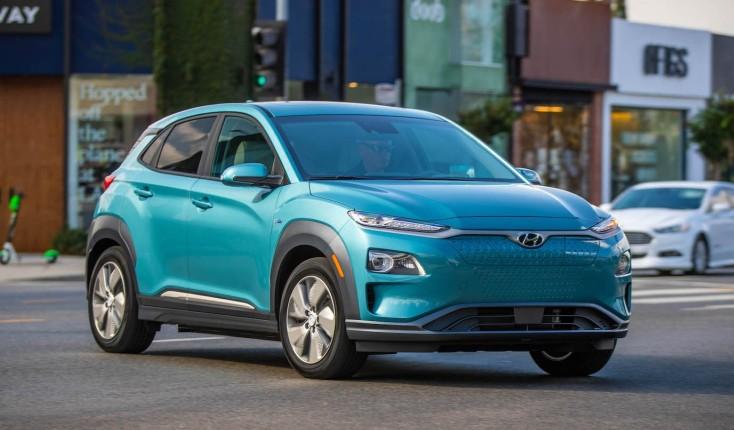

Nigeria’s federal government has moved to eliminate import duties on electric vehicles, part of a broader fiscal push that also removed import duties and VAT on cooking gas and compressed natural gas under the Presidential Gas for Growth Initiative announced in late July. The move builds on earlier measures introduced in April to reduce import duties on EVs, underscoring Abuja’s determination to make electric mobility commercially viable rather than aspirational.
The policy shift comes as adoption gradually gathers pace from a low base. Industry estimates suggest Nigeria’s EV fleet now numbers between 15,000 and 20,000 vehicles, with more than five local EV companies operating in the market, including Innoson’s domestically assembled model. A separate legislative framework, the Electric Vehicle Transition and Green Mobility Bill, has passed its second reading in the Senate and is before the Committee on Industry ahead of further legislative consideration. The bill proposes additional incentives, including tax holidays and toll exemptions, complementing the government’s fiscal support for EV adoption.
The biggest constraint remains electricity. Nigeria’s grid operates well below installed generation capacity, while public charging infrastructure is still limited across the country. Rather than waiting for the grid to improve, many market participants are developing alternative solutions. LUG West Africa has begun deploying solar-powered charging stations across Lagos by retrofitting monocrystalline solar panels onto existing street-light infrastructure. In the two-wheeler segment, battery-swap operators such as Spiro already operate more than 100 swap stations across Lagos and Ogun States and plan significant expansion. The model eliminates lengthy charging times by allowing riders to exchange depleted batteries for fully charged ones within minutes, reducing dependence on an unreliable grid.
Government infrastructure plans are also beginning to take shape. The Federal Ministry of Industry, Trade and Investment has pledged to support the rollout of a nationwide EV charging network to complement the proposed legislation. The commitment follows a January memorandum of understanding with South Korea’s Asia Economic Development Committee to support domestic EV assembly and charging infrastructure.
The immediate beneficiaries are likely to be commercial operators—including ride-hailing services, last-mile delivery firms and motorcycle logistics companies—whose predictable routes and centralised charging arrangements make power constraints easier to manage. Widespread private adoption is likely to take longer. EVs still carry price tags above ₦20 million, while the Nigeria Customs Service has cautioned that, without effective transition policies, Nigeria could become a destination for ageing internal combustion engine vehicles displaced from other markets.
The direction of travel is clear. Government policy is increasingly aligned behind electric mobility, while businesses are finding ways to work around infrastructure gaps. For now, Nigeria’s EV transition is being driven not by a fully modernised electricity grid, but by innovative solutions designed to operate despite its limitations.