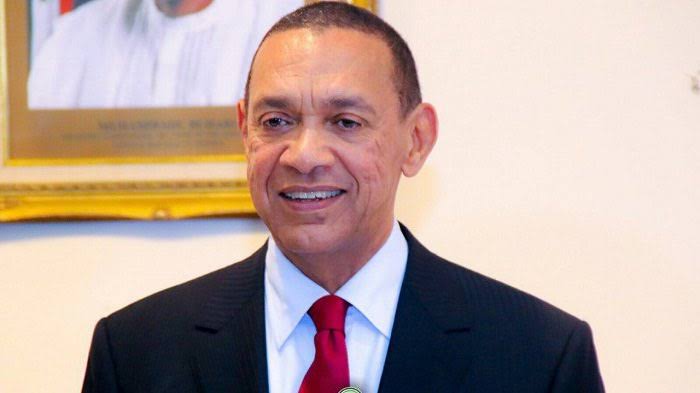

Ben Murray-Bruce, founder of the Silverbird Group, has urged Innoson Vehicle Manufacturing (IVM) to make electric vehicles (EVs) the centrepiece of its business, arguing that rising fuel costs, Nigeria’s mineral resources and the global transition to cleaner transport present a major opportunity for the country’s indigenous automaker.
In a post on X on Tuesday, the former senator praised Innoson founder Innocent Chukwuma for building Nigeria’s homegrown automobile industry, saying he had succeeded in putting locally manufactured vehicles on the nation’s roads. While acknowledging the company’s progress in electric mobility, Murray-Bruce challenged Innoson to make EVs “your main line, not your sideline.”
His appeal comes as petrol prices remain above ₦1,000 per litre in many parts of Nigeria following the removal of fuel subsidies, increasing the cost of transportation for households and businesses. Murray-Bruce argued that electric vehicles, which have fewer moving parts than conventional petrol-powered cars, offer lower operating and maintenance costs over time. He also pointed to Nigeria’s abundant sunshine as an opportunity to support cleaner transport through solar-powered charging solutions.
The businessman further highlighted Nigeria’s lithium deposits, particularly in Nasarawa State, saying the country’s mineral resources could support the emerging electric vehicle value chain if properly developed.
His comments reflect a broader global shift towards vehicle electrification. According to the International Energy Agency, electric cars accounted for more than one in five new vehicles sold worldwide in 2025, with China remaining the world’s largest EV market. Several African countries, including Ethiopia, have also introduced policies aimed at accelerating the adoption of electric mobility, although implementation has varied.
Murray-Bruce has advocated electric vehicle manufacturing before. In 2019, he suggested that Innoson could produce electric vehicles not only for Nigeria but also for export, describing the transition as an opportunity to reduce the country’s dependence on fossil fuels and build a competitive manufacturing industry.
Innoson has since expanded its alternative-energy portfolio. The company has unveiled electric models, including the EX01, EX02 and IVM Link, while also producing compressed natural gas (CNG) vehicles under the Federal Government’s autogas programme. Chukwuma has said the company’s investments are intended to support Nigeria’s transition to cleaner and more affordable transportation.
However, industry analysts say widespread adoption of electric vehicles in Nigeria will depend on more than local manufacturing. Limited charging infrastructure, inconsistent electricity supply, vehicle affordability and supportive government policies remain critical challenges.
Even so, Murray-Bruce’s intervention adds momentum to growing calls for Nigeria’s largest indigenous automaker to take a leading role in Africa’s transition to electric mobility.