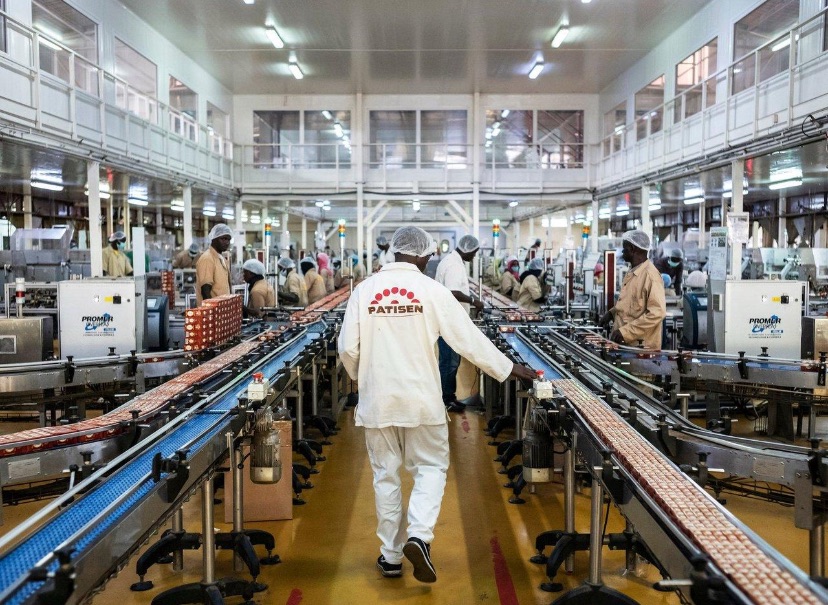

Nigeria’s manufacturing sector is facing a major challenge as businesses struggle with some of the highest production costs in the world, according to the National Sugar Development Council (NSDC). The agency says manufacturers in Nigeria pay far more for electricity, loans, and transportation than businesses in countries like China and Vietnam, making it difficult for local factories to compete.
The Executive Secretary of the NSDC, Kamar Bakrin, raised these concerns while speaking during the technical session of the 17th National Council on Industry, Trade and Investment held in Enugu.
According to him, the biggest problem facing manufacturers is not a lack of customers but the high cost of producing goods.
Bakrin explained that there is already strong demand for products made in Nigeria across Africa. However, many businesses struggle because producing goods has become too expensive.
One of the biggest challenges is electricity. He noted that factories in Vietnam pay around eight US cents per kilowatt-hour for industrial power, while manufacturers in China pay about 10 cents. In comparison, Nigerian factories pay about 15 cents when using the national grid. The cost becomes even higher—close to 30 cents per kilowatt-hour—when businesses depend on diesel generators due to unreliable electricity.
Because of the unstable power supply, many factories have been forced to generate their own electricity. Bakrin revealed that manufacturers spent an estimated ₦1.34 trillion on self-generated power last year.
He described the situation by saying many factories have been forced to operate their own private power plants alongside their manufacturing businesses.
Access to affordable finance is another major obstacle. According to Bakrin, manufacturers in Nigeria borrow money at interest rates ranging from 27 to 35 percent. In comparison, businesses in Vietnam pay around nine percent, while those in China access loans at roughly three percent.
Logistics also remains a challenge. Nigeria currently ranks 88th out of 139 countries on the World Bank’s Logistics Performance Index, far behind Vietnam and China. Long delays at ports, poor transportation infrastructure, and multiple charges continue to increase production costs for businesses.
Despite Nigeria’s large population of over 230 million people and access to the African Continental Free Trade Area (AfCFTA), manufacturing contributes only about eight percent of the country’s Gross Domestic Product (GDP). Factory capacity utilisation has also dropped to 57.7 percent, showing that many industries are operating below their full potential.
Bakrin, however, believes the country has a unique opportunity to reverse the trend. He said recent economic reforms have improved stability, reduced inflation from previous highs, and increased Nigeria’s foreign reserves to about $51 billion, creating a better environment for investment.
He also pointed to Nigeria’s urea industry as proof that the right government policies can transform manufacturing. He explained that after natural gas was priced to support industrial production instead of being treated mainly as a source of government revenue, Nigeria’s urea production capacity grew from 500,000 tonnes in 2005 to 6.5 million tonnes, making the country one of the world’s leading exporters of nitrogen fertiliser.
To strengthen Nigeria’s manufacturing sector, Bakrin proposed several key reforms. These include providing stable electricity to industrial clusters at affordable rates, reducing industrial lending to single-digit interest rates, cutting port clearance time from the current 18–21 days to less than seven days, and doubling worker productivity by 2030.
He also called on every state government to establish at least one industrial cluster with reliable power, harmonise taxes and levies, remove unnecessary checkpoints along industrial routes, and improve technical education to meet the needs of modern industries.
According to Bakrin, improving industrial competitiveness would create millions of jobs, increase exports, strengthen the naira, reduce imports, and encourage more young Nigerians to build their future at home instead of seeking opportunities abroad.
He stressed that government support should always be tied to measurable performance to ensure transparency and long-term results.