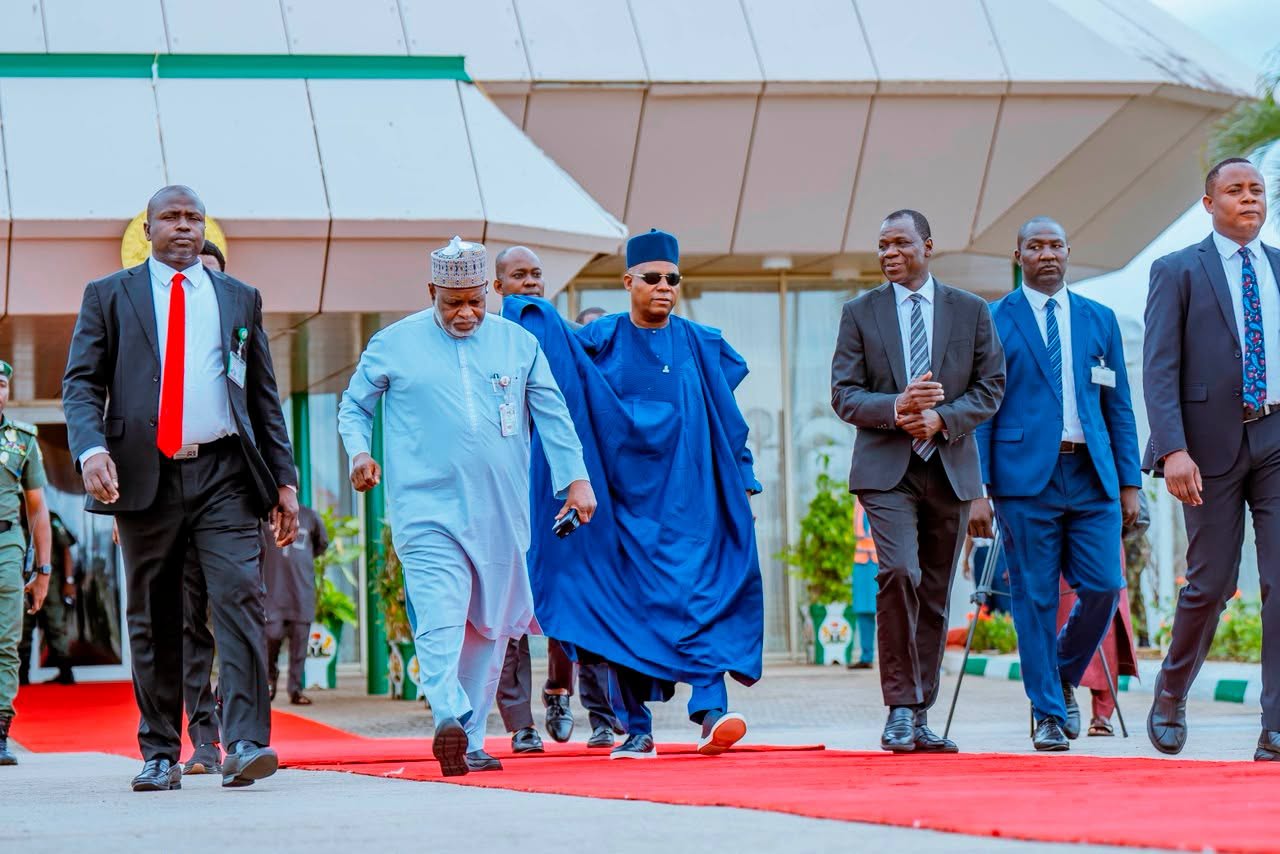

Nigeria has stepped up efforts to accelerate its agro-industrial transformation after a high-powered delegation led by Vice President Kashim Shettima concluded a working visit to the Glo-Djigbé Industrial Zone (GDIZ) in the Republic of Benin, seeking practical lessons for the country’s Special Agro-Industrial Processing Zones (SAPZ) programme.
The visit, which also included engagements in Ethiopia, is part of the Federal Government’s strategy to develop integrated industrial hubs that process agricultural commodities into higher-value products, reduce post-harvest losses, create jobs, and expand non-oil exports.
Accompanying the Vice President were Governors Hope Uzodimma of Imo, Dauda Lawal of Zamfara, Caleb Mutfwang of Plateau, AbdulRahman AbdulRazaq of Kwara, Dikko Umar Radda of Katsina, and Umar Namadi of Jigawa.
The delegation toured the 1,640-hectare GDIZ, one of West Africa’s leading agro-industrial parks. The facility processes commodities including cotton, cashew nuts and soybeans into finished textiles, edible products and other export-ready goods, demonstrating how value addition can increase earnings while strengthening local manufacturing.
Following the visit, the governors announced plans to adapt elements of the Benin model to their respective states based on their agricultural strengths.
Governor Dauda Lawal said Zamfara intends to revive its once-thriving textile industry by leveraging local cotton production and rebuilding the state’s industrial base. He recalled that the state previously operated a textile factory employing thousands of workers across multiple shifts alongside more than 20 cotton ginneries.
Katsina Governor Dikko Umar Radda said his administration would strengthen value chains around cotton and soybeans by promoting integrated processing industries, while Jigawa Governor Umar Namadi reaffirmed plans to reduce dependence on exporting raw agricultural produce in favour of domestic value addition.
Speaking on behalf of the delegation, Kwara Governor AbdulRahman AbdulRazaq said participating states are already working with development partners to provide the infrastructure required for successful industrial clusters. Imo Governor Hope Uzodimma stressed that each state must build industries around its comparative agricultural advantage, while Plateau Governor Caleb Mutfwang said sustained political commitment, sound planning and efficient management would determine the long-term success of the initiative.
The SAPZ programme is jointly financed by the African Development Bank (AfDB), the Islamic Development Bank and the International Fund for Agricultural Development (IFAD), with total funding of approximately $538 million.
Phase One of the programme currently covers seven states and the Federal Capital Territory. Federal authorities have indicated that additional states are expected to join subsequent phases as implementation progresses.
Economists say replicating successful industrial parks such as GDIZ could strengthen Nigeria’s food processing industry, improve export competitiveness, attract private investment and generate thousands of jobs. However, they note that the programme’s ultimate success will depend on timely infrastructure delivery, policy consistency, reliable power supply, access to finance and effective coordination between federal and state governments.
If successfully implemented, the SAPZ initiative could play a significant role in reducing Nigeria’s reliance on raw commodity exports while supporting broader economic diversification and industrial growth.