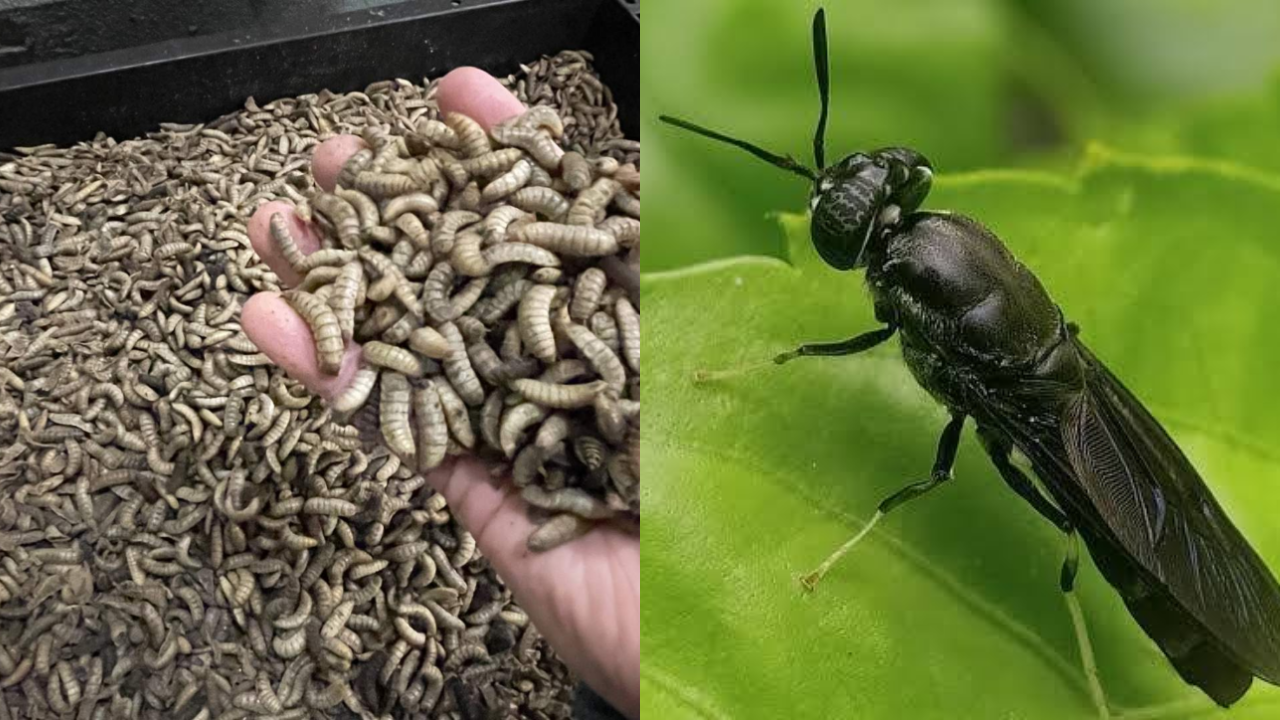

Nigeria’s search for lower-cost livestock feed and more sustainable organic waste management is creating a promising commercial opportunity for Black Soldier Fly (BSF) farming.
According to a study by Manufacturing Africa, a UK government-funded programme, insect-based animal feeds and by-products present a market opportunity of $250 million to $1.2 billion for Nigeria by 2030. Feed accounts for more than half of production costs in aquaculture and can exceed 70–80% in commercial poultry production, making alternative protein sources increasingly attractive.
BSF larvae (Hermetia illucens) consume food waste, fruit and vegetable residues, brewery by-products and other biodegradable materials. Scientific studies show the larvae can reduce organic waste volumes by 50–80%, converting a portion of the waste into valuable insect biomass. According to ILRI and industry stakeholders at a National Roundtable hosted by the International Livestock Research Institute (ILRI) in Ibadan, larvae develop into high-protein feed within 10 to 14 days.
Dr. Tunde Amole, ILRI’s Nigeria Country Representative, states that BSF larvae contain about 40–45% protein, making them a viable alternative to fishmeal and soybean meal in poultry, fish and pig feed. Industry stakeholders note that supply, not demand, remains the major constraint.
Institutional support is strengthening. The Raw Materials Research and Development Council (RMRDC) has conducted training programmes for SMEs on BSF farming. The Insects4Feed Impact Cluster, launched in 2021 and supported by the Netherlands Enterprise Agency (RVO), has trained over 50 entrepreneurs and established 12 small-scale BSF businesses. Partners include the University of Ibadan, IITA, Nigerian Breweries, and the Quality Insects for Feed & Food Association of Nigeria (QIFFAN).
Despite progress, challenges remain. Nigeria’s regulatory framework for insect-based feed is still underdeveloped, while producers face high processing costs, limited access to equipment, and inconsistent quality standards.
Even so, Nigeria’s tropical climate supports year-round production without expensive temperature controls, and organic waste is abundant. As investment, regulation and technical expertise improve, BSF farming is increasingly positioned to become a commercially significant segment of Nigeria’s agricultural value chain and circular economy.