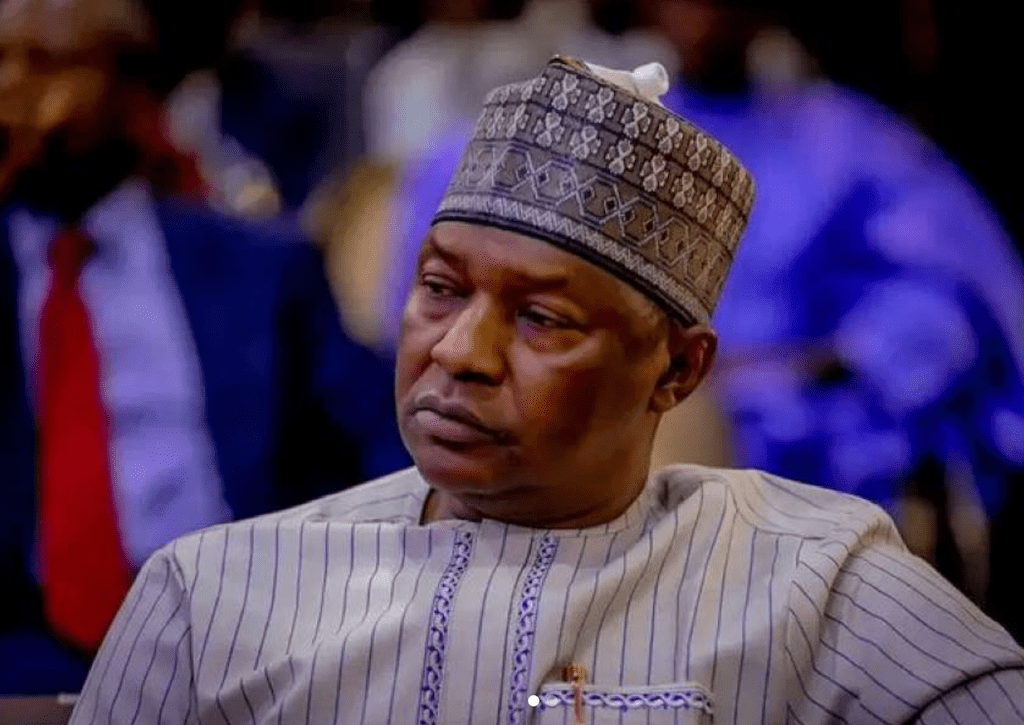

A Federal High Court in Abuja has ordered the final forfeiture of 48 properties linked to former Attorney-General of the Federation and Minister of Justice, Abubakar Malami (SAN), to the Federal Government, marking a significant development in one of Nigeria’s high-profile asset recovery cases.
Justice Joyce Abdulmalik granted the Economic and Financial Crimes Commission’s (EFCC) application, holding that Malami, members of his family, and companies associated with them failed to provide sufficient evidence to overturn the commission’s allegation that the assets were acquired through unlawful means.
In her ruling, the judge dismissed the respondents’ objections, describing them as lacking merit. She stressed that the court’s assessment was centred on whether the source of funds used to acquire the assets had been satisfactorily explained, rather than on the issue of legal ownership alone.
The forfeited properties are part of a broader portfolio of 57 assets that had been placed under an interim forfeiture order obtained by the EFCC in January 2026. Following the court’s review of the evidence presented by both parties, nine properties were discharged from the interim order, while 48 were permanently forfeited to the Federal Government.
According to court proceedings, the assets are spread across Abuja, Kano, Kebbi and Kaduna states. They include luxury hotels, residential duplexes, commercial plazas and a private university. The EFCC had estimated the total value of the assets at more than ₦212 billion.
The ruling represents one of the most substantial asset forfeiture decisions delivered by a Nigerian court in recent years, underscoring the judiciary’s role in enforcing the country’s anti-corruption and asset recovery laws. Under Nigeria’s legal framework, courts may order the forfeiture of assets where investigators establish that the property constitutes proceeds of unlawful activities and affected parties fail to provide a satisfactory explanation of their acquisition.
The judgment is also expected to reinforce the EFCC’s ongoing campaign to recover assets allegedly linked to financial crimes and abuse of public office. Asset recovery remains a central component of Nigeria’s anti-corruption strategy, with recovered properties and funds typically transferred to the Federal Government following final court orders.
As of the time of reporting, Malami’s legal team had not publicly stated whether they would challenge the judgment at the Court of Appeal. The decision leaves open the possibility of further legal proceedings should an appeal be filed.