
The Nigerian National Petroleum Company (NNPC) Limited says it is repositioning itself from being solely an oil and gas producer to becoming an integrated energy “ecosystem builder,” as the state-owned energy company seeks to strengthen partnerships, improve operational efficiency and expand its regional footprint.
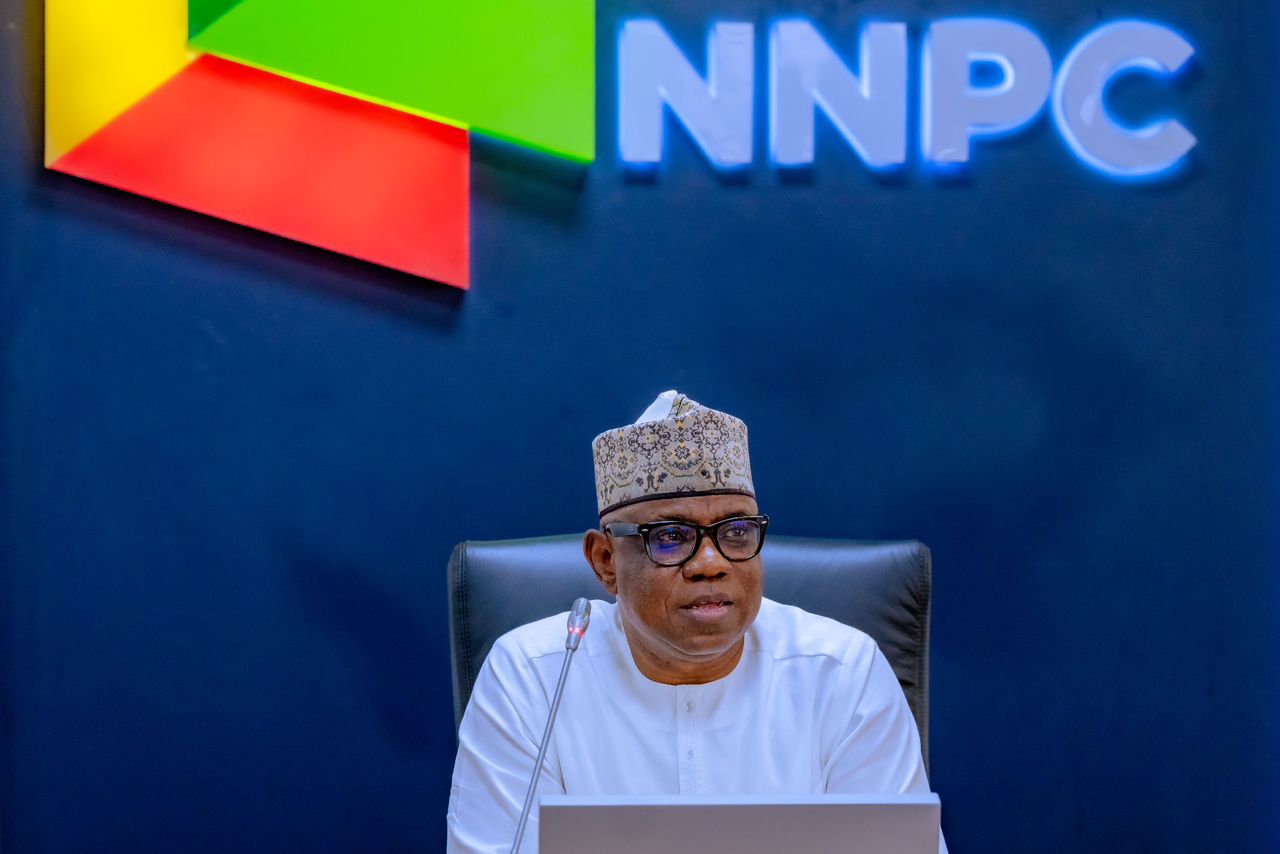
Group Chief Executive Officer Bayo Ojulari outlined the strategy during the 2026 Nigeria Oil and Gas (NOG) Energy Week in Abuja, where he said the company’s future growth would depend on connecting capital, technology, policy, talent and markets to unlock greater value across Nigeria and Africa.
“We no longer view NNPC Limited as merely an energy producer, but as an ecosystem builder; connecting capital, technology, policy, talent and markets to create lasting value for Nigeria and Africa,” Ojulari said.
The strategic shift comes alongside a stronger financial and operational performance. According to Ojulari, NNPC achieved approximately $3.4 billion in operating cost savings through contract restructuring, procurement reforms and operational optimisation, marking one of its most significant efficiency improvements since its commercialisation under the Petroleum Industry Act (PIA).
The company also projects profit after tax of N5.76 trillion, while government revenue contributions rose 21.8% to N19.5 trillion. Crude oil production increased 6% year-on-year to 569.7 million barrels, while gas production climbed 8.1% to 2,576 billion standard cubic feet, reflecting growing output from upstream operations.
Nigeria’s crude production has now reached about 1.71 million barrels per day, its highest level in five years, driven by improved pipeline security and higher asset availability. NNPC Exploration and Production Limited recorded a peak production level of 365,000 barrels per day, while key export infrastructure, including the Trans Niger, Trans Escravos and Trans Forcados pipelines, reported full operational availability. Export terminals have also improved significantly, with average recovery rates reaching about 98%, compared with severe disruptions experienced in 2022.
Beyond upstream operations, NNPC is pursuing regional expansion through its retail business. Its lubricant brand, Oleum, has entered selected West African markets, underscoring the company’s ambition to become a broader regional energy player. Ojulari also highlighted governance reforms, including NNPC’s first Group Earnings Call and the introduction of real-time production dashboards aimed at improving transparency and investor confidence.
Gas remains central to the company’s long-term strategy. Through the NNPC Gas Master Plan 2026, the company estimates that about $22 billion will be required to develop critical pipeline infrastructure, including the Ajaokuta-Kaduna-Kano (AKK) and OB3 gas pipelines, to monetise Nigeria’s estimated 210 trillion cubic feet of proven gas reserves. NNPC is also progressing work on the Nigeria-Morocco Gas Pipeline, a major cross-border project expected to enhance regional energy integration.
Despite the positive performance indicators, significant challenges remain. Nigeria’s four state-owned refineries are still not operational, with Ojulari acknowledging that they cannot currently be run profitably. Key gas infrastructure projects, including the AKK and OB3 pipelines, have experienced repeated commissioning delays.
Looking ahead, NNPC aims to increase crude oil production to 2 million barrels per day by 2027 and 3 million barrels per day by 2030, while expanding gas production from 7.62 billion cubic feet per day to 10 billion by 2027 and 12 billion by 2030. Achieving those targets will depend on sustained investment, improved security, timely completion of infrastructure projects and stronger collaboration across the energy value chain.