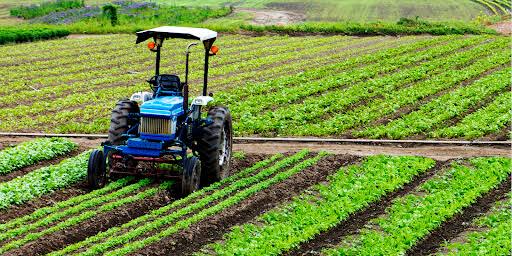

Nigeria’s ambitious plan to modernise agriculture through increased mechanisation is facing a significant hurdle as the high cost of farming equipment continues to put tractors and modern machinery beyond the reach of millions of smallholder farmers, according to industry stakeholders.
The warning comes from the Rice Millers Association of Nigeria (RIMAN), which says the country’s mechanisation programme risks falling short of its objectives unless the government complements equipment deployment with affordable financing and support tailored to small-scale farmers.
Speaking to Punch, RIMAN National Chairman Peter Dama said the government’s efforts to expand access to agricultural machinery have been undermined by the financial realities confronting farmers.
“The programme is there, but people are not really going in there for it because the amount, the money, where is the money?” Dama said, stressing that many farmers simply lack the capital needed to purchase tractors and other mechanised equipment.
He urged policymakers to focus on lower-cost technologies such as solar-powered irrigation pumps, two-wheel tractors, and compact tillers, arguing that these tools are more practical and accessible for Nigeria’s predominantly smallholder farming system.
“The tractorisation thing is a problem. People don’t have the money,” he added.
The concerns highlight a wider structural challenge within Nigeria’s agricultural sector. According to industry estimates, the country’s mechanisation level remains at approximately 0.27 horsepower per hectare, far below the 1.5 horsepower per hectare recommended by the Food and Agriculture Organization (FAO) for efficient agricultural production.
Nigeria also has only about six tractors for every 10,000 hectares of farmland, significantly below the FAO benchmark of roughly 200 tractors per 10,000 hectares, illustrating the scale of the equipment deficit.
Godson Ohuruogu, Chief Executive Officer of agricultural technology firm TracTrac, has previously estimated that Nigeria requires at least 50,000 additional tractors over the next three to five years to meaningfully improve farm productivity and reduce dependence on manual labour.
Funding constraints continue to compound the challenge. Agriculture received only 1.7% of Nigeria’s ₦49.7 trillion 2025 national budget, well below the 10% allocation pledged by African governments under the Maputo Declaration to strengthen agricultural development.
The financing gap is particularly significant because smallholder farmers account for an estimated 98% of Nigeria’s domestic food production, yet many remain unable to access mechanisation, affordable credit, or modern farming technologies.
The Federal Government has sought to address the equipment shortage through its Renewed Hope Agricultural Mechanisation Programme. President Bola Tinubu launched 2,000 tractors in June 2025 as part of efforts to boost food production and reduce import dependence. However, industry observers note that delays in distributing the equipment slowed the programme’s immediate impact.
Agricultural economists say that without affordable financing schemes, equipment leasing programmes, rural credit expansion, and stronger private-sector participation, Nigeria’s mechanisation drive may struggle to deliver the productivity gains needed to improve food security, lower production costs, and support the country’s long-term agricultural transformation.