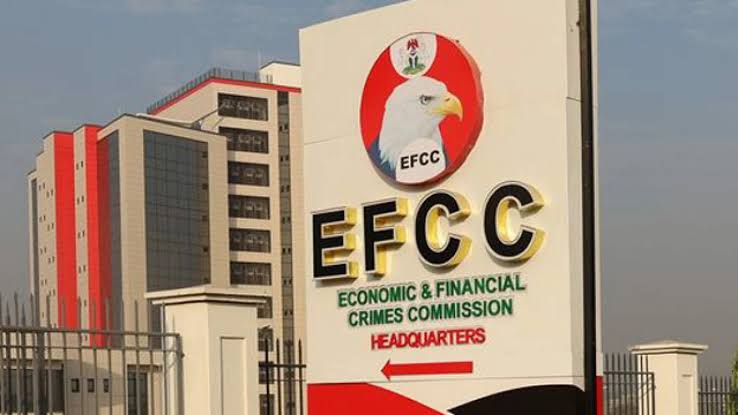

The Economic and Financial Crimes Commission (EFCC) has arraigned the Group Managing Director of Brass Engineering and Construction Nigeria Limited, Egwuche Gladys, over alleged violations of Nigeria’s anti-money laundering laws arising from a $600,000 equipment sale conducted through multiple cash payments.
The case, filed by the EFCC’s Enugu Zonal Directorate before Justice F. O. Giwa-Ogunbanjo of the Federal High Court, centres on allegations that the executive accepted 12 separate cash payments of $50,000 each between March and April 2023, contrary to provisions of the Money Laundering (Prevention and Prohibition) Act, 2022.
According to the anti-graft agency, the payments formed part of the proceeds from the sale of a Granite Stone Crushing Line to Patan Nigeria Ltd and Reinforce Global Resources JV. Prosecutors allege that the transactions were deliberately structured in cash despite exceeding Nigeria’s statutory threshold for cash payments, which requires qualifying transactions above ₦10 million to be processed through a financial institution.
The EFCC contends that the cumulative cash receipts, estimated at approximately $600,000 or about ₦827 million at the prevailing exchange rate referenced in the charge, violated the country’s financial reporting and anti-money laundering regulations designed to enhance transparency and curb illicit financial flows.
During the arraignment, Gladys pleaded not guilty to the 12-count charge.
Following the plea, Justice Giwa-Ogunbanjo granted the defendant bail in the sum of ₦200 million with two sureties in like sum. The court also imposed conditions to guarantee her appearance throughout the trial.
The matter has been adjourned until November 11, 2026, when the court is expected to commence substantive hearing of the case.
Brass Engineering and Construction Nigeria Limited has also been named as a co-defendant in the proceedings, exposing the company to potential legal consequences should the prosecution secure a conviction.
The prosecution underscores the EFCC’s continued enforcement of the Money Laundering (Prevention and Prohibition) Act, 2022, which tightened controls on high-value cash transactions and strengthened Nigeria’s framework for combating money laundering and terrorist financing.
Legal experts note that the case highlights increasing regulatory scrutiny of corporate financial transactions, particularly in capital-intensive industries where equipment purchases often involve significant sums. Businesses are expected to channel qualifying payments through regulated financial institutions to ensure transparency, maintain audit trails, and comply with Nigeria’s anti-money laundering framework.
As the trial proceeds, the court will determine whether the prosecution can establish that the alleged cash payments breached the provisions of the law. Under Nigerian law, the charges remain allegations until proven in court.