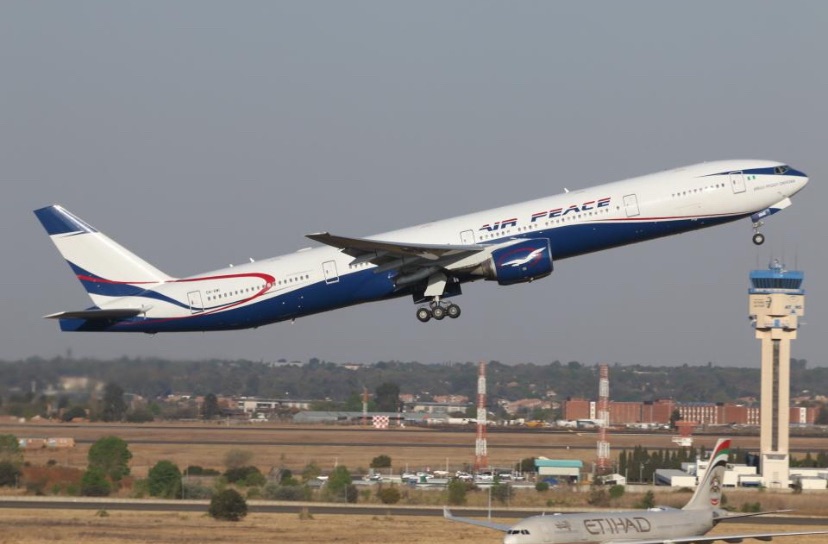

Nigeria’s international aviation market is still largely controlled by foreign airlines, with industry experts saying they handle about 90 percent of passengers travelling into and out of the country.
According to recent aviation data, Nigeria recorded about 4.85 million international passengers in 2025. Europe remained the country’s biggest international destination, accounting for about 38 percent of departing passengers. Travel within Africa made up around 23 percent, while direct flights across the Atlantic accounted for about 18 percent.
Speaking on the situation, the Minister of Aviation and Aerospace Development, Festus Keyamo, said foreign airlines continue to dominate international travel from Nigeria.
He noted that between 90 and 95 percent of Nigerians travelling abroad use foreign airlines instead of local carriers. This, he said, shows how limited the presence of Nigerian airlines is in the global aviation market.
Former Commandant of the Murtala Muhammed Airport, Capt. John Ojikutu (Rtd.), described the situation as worrying. According to him, Nigeria is losing a significant share of the benefits that come from international air travel because local airlines operate only a few international routes.
Ojikutu explained that foreign airlines also contribute the largest share of revenue earned by the Federal Airports Authority of Nigeria (FAAN). He estimated that they account for about 80 percent of FAAN’s annual earnings through their international operations.
He added that more than 30 foreign airlines currently operate flights into Nigeria every day under over 90 Bilateral Air Service Agreements (BASA), while Nigerian airlines have only a small presence outside West Africa.
To change the situation, Ojikutu called on the Federal Government to develop two strong national flag carriers from existing Nigerian airlines. He suggested that one airline should focus on regional and African routes, while the other should handle long-distance international destinations.
He also argued that a national flag carrier should not be fully owned by private investors because it represents the country’s interests abroad. He proposed that private investors own up to 50 percent of such an airline, while the remaining shares should be shared between the government and the Nigerian public.
According to him, without a sustainable national airline strategy, foreign carriers will continue to dominate Nigeria’s aviation market.
Another aviation expert, Capt. Mohammed Gbadamasi, said foreign airlines remain successful because they have decades of experience, stronger financial resources, larger aircraft fleets and well-established operational systems.
He explained that these airlines are better prepared to handle economic challenges while maintaining reliable services for passengers.
Gbadamasi noted that only a few Nigerian airlines currently operate international flights, making it difficult for them to compete with established global carriers.
He also pointed to frequent flight delays and cancellations by local airlines as one reason many passengers prefer foreign operators. According to him, inadequate aircraft and operational challenges have affected the reputation of domestic airlines.
He believes Nigerian airlines will require years of investment, improved management and stronger financial support before they can compete effectively on international routes.
Another aviation expert, Frank Oruye, called for reforms in the way international routes are allocated under Bilateral Air Service Agreements.
He explained that BASA agreements allow countries to appoint national airlines to operate approved international routes. However, he believes Nigeria should introduce a more transparent and competitive process when selecting airlines for these routes.
Oruye recalled that although Air Peace has secured access to the London Heathrow route under the current administration, Nigerian airlines still have limited access to other major international markets such as the United States and Canada.
He said a fair and competitive route allocation system would encourage local airlines to improve their standards, expand their operations and become more competitive globally.
Industry stakeholders believe that with better government support, improved funding and stronger airline management, Nigerian carriers can gradually increase their presence on international routes and reduce the country’s dependence on foreign airlines.