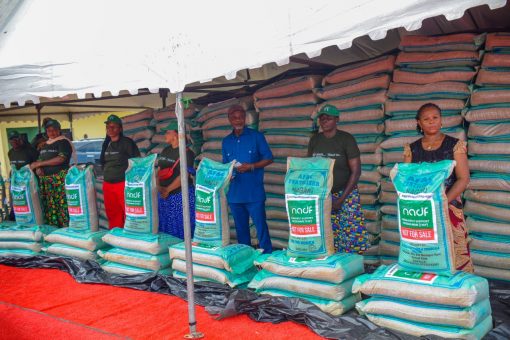

The National Agricultural Development Fund (NADF) has commenced the distribution of 80,640 bags of subsidised fertiliser to more than 20,000 smallholder farmers across Nigeria’s South-South region, reinforcing the Federal Government’s efforts to boost agricultural productivity, strengthen food security and reduce production costs ahead of the 2026 planting season.
The programme was officially launched in Calabar, Cross River State, where NADF began the regional rollout targeting 20,160 registered farmers in Cross River, Akwa Ibom, Delta and Edo states. Each beneficiary will receive four bags of locally blended, high-quality fertiliser under the Fund’s Farm Input Support Programme (FISP).
To minimise diversion and curb black-market sales, every fertiliser bag has been clearly labelled “Not for Sale,” reflecting the government’s renewed emphasis on transparency and accountability in agricultural support programmes.
The South-South exercise forms part of a larger nationwide intervention through which NADF plans to distribute 515,720 bags of fertiliser to 128,930 farmers across the country. The initiative is intended to improve access to critical farm inputs while supporting domestic fertiliser blending plants, in line with the government’s strategy to deepen local manufacturing and reduce dependence on imported agricultural inputs.
The intervention comes at a time when fertiliser prices remain under pressure globally due to elevated energy costs, supply chain disruptions and currency volatility. By absorbing a significant portion of farmers’ input costs, the subsidy is expected to improve profit margins for smallholder producers while encouraging higher crop yields during the coming planting season.
For farmers in the South-South, where crops such as cassava, plantain, maize and oil palm dominate agricultural production, timely access to fertiliser could significantly improve soil nutrient levels and enhance productivity. Higher yields may also help increase food supplies, ease pressure on food prices and strengthen rural incomes.
Beyond supporting agricultural output, the programme is expected to generate wider economic benefits. Lower input costs allow farmers to redirect scarce capital towards mechanisation, irrigation, improved seedlings and post-harvest storage, investments that can raise productivity and reduce losses across the agricultural value chain.
NADF officials said logistics for subsequent phases of the programme have already been mobilised, with monitoring teams deployed to oversee distribution and ensure fertiliser reaches intended beneficiaries. The Fund said the intervention reflects the Federal Government’s broader commitment to expanding domestic food production, supporting local agro-industries and building a more resilient agricultural sector capable of driving sustainable economic growth.