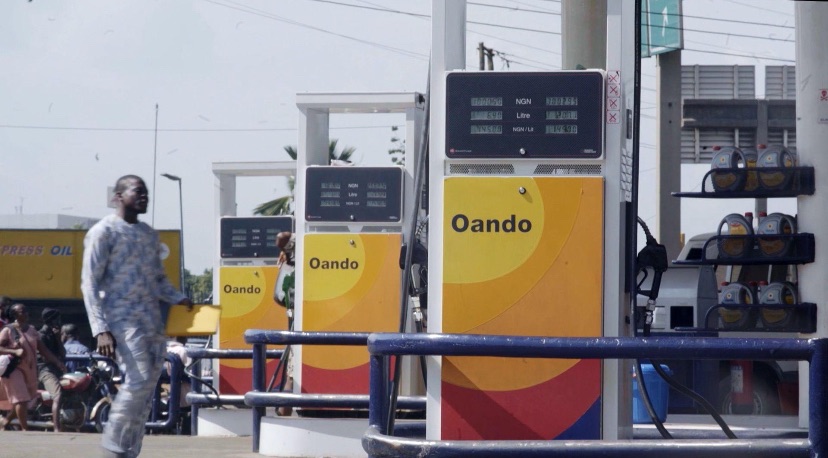

The Federal Competition and Consumer Protection Commission (FCCPC) has expressed concern that Nigerians are not fully benefiting from the recent decline in global crude oil prices.
According to the commission, its latest market checks showed that although international crude oil prices have dropped sharply, the reduction in petrol prices across Nigeria has been very small. The FCCPC believes consumers should be enjoying greater price relief than they are currently receiving.
Speaking on Sunday, the Executive Vice Chairman and Chief Executive Officer of the FCCPC, Tunji Bello, explained that the commission does not control fuel prices because Nigeria operates a deregulated petroleum market. However, he stressed that the commission has the responsibility to ensure businesses compete fairly and do not exploit consumers.
Bello noted that marketers and fuel dealers are usually quick to increase pump prices whenever crude oil prices rise. However, he questioned why the same speed is not seen when global oil prices fall.
He said a truly competitive market should allow consumers to benefit from both rising and falling market conditions instead of only experiencing price increases.
The FCCPC revealed that international crude oil prices recently dropped to around $73 per barrel after tensions between the United States and Iran eased with a ceasefire agreement and the reopening of the Strait of Hormuz. Earlier this year, crude prices had climbed to nearly $120 per barrel before falling back to levels last seen in February.
During the period of high crude prices in April and May, petrol sold for between ₦1,350 and ₦1,500 per litre, while diesel reached about ₦2,000 per litre in many locations. In February, petrol was commonly sold for between ₦800 and ₦900 per litre.
Although petrol prices have since reduced, the FCCPC said the current average retail price of about ₦1,200 per litre still does not reflect the full benefit of the significant decline in global crude prices. It also noted that some local refineries are currently selling fuel to marketers at gantry prices ranging from ₦1,025 to ₦1,075 per litre.
The commission acknowledged that several factors influence fuel prices in Nigeria. These include foreign exchange rates, refining costs, transportation, financing expenses and distribution costs. Even so, it maintained that lower international crude prices should have translated into more noticeable reductions at filling stations.
Bello warned that market liberalisation does not give businesses the freedom to engage in unfair pricing or anti-competitive behaviour. He stated that if there is credible evidence that companies are exploiting consumers or violating competition laws, the FCCPC will investigate and take appropriate enforcement action.
The commission also encouraged Nigerians to report any suspected cases of unfair pricing, misleading information or anti-competitive practices through its official complaint channels.
The FCCPC said it remains committed to protecting consumers and ensuring that competition in the downstream petroleum sector delivers fair prices and better value for Nigerians.