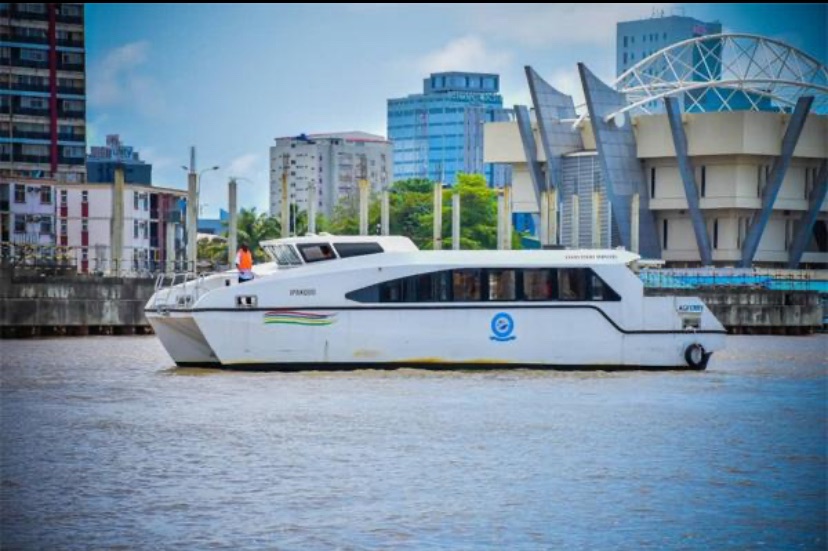

Lagos State has taken a major step toward improving its transportation system after securing a €170 million financing partnership with EIB Global, the development arm of the European Investment Bank (EIB). The funding will support the development of a modern, environmentally friendly water transport network designed to reduce traffic congestion and improve mobility across the state.
The agreement was officially announced during a signing ceremony and project site visit at the headquarters of the Lagos State Waterways Authority (LASWA). The event was attended by key representatives from the European Union, the European Investment Bank, and other international partners committed to supporting sustainable infrastructure development in Lagos.
This marks the first partnership between LASWA and the European Investment Bank and forms part of the larger Omi Eko Project. The initiative is focused on transforming Lagos waterways into a reliable, efficient, and low-carbon transportation system capable of serving millions of residents.
The €170 million loan is backed by a European Union guarantee under the Global Gateway Initiative. Additional funding support from the French Development Agency (AFD) and the European Commission brings the total investment in the project to approximately €410 million.
Under the Omi Eko Project, Lagos will develop an extensive water transportation network featuring modern ferry terminals, upgraded jetties, maintenance facilities, and electric-powered ferries. These electric vessels are expected to significantly reduce greenhouse gas emissions while also improving water quality across Lagos’ lagoon system.
The project includes the establishment of 15 organized ferry routes covering about 140 kilometres of waterways. It will connect 25 upgraded terminals and introduce 75 modern electric ferries, each capable of carrying up to 440 passengers. When completed, the initiative is expected to dramatically increase the use of water transportation in Lagos.
Currently, water transport accounts for less than one percent of movement within the state. However, the government aims to increase that figure to around eight percent by 2032, in line with Lagos’ long-term transportation development plans.
Lagos State Commissioner for Transportation, Oluwaseun Osiyemi, described the partnership as a significant achievement for the state. He stated that the government remains committed to providing the necessary support, policies, and transparency needed to ensure the successful delivery of the project.
According to him, the Omi Eko Project demonstrates Lagos State’s determination to provide world-class infrastructure that will improve transportation, reduce road traffic pressure, and support sustainable urban growth.
The Special Adviser to the Governor on Blue Economy, Oluwadamilola Emmanuel, also praised the partnership, describing it as a major boost to Lagos’ efforts to unlock the economic potential of its waterways. He noted that the project would serve as a strong example of what can be achieved through strategic international collaboration.
EIB Vice-President Ambroise Fayolle said the investment would create a safer, more affordable, and efficient transport system while supporting economic growth and job creation. He added that the project aligns with the European Union’s commitment to promoting sustainable development in West Africa.
European Union Ambassador to Nigeria and ECOWAS, Gautier Mignot, highlighted the importance of the partnership, saying it reflects the strong relationship between the EU and Nigeria. He expressed confidence that the project would improve the daily lives of millions of Lagos residents while strengthening transport connectivity within the region.
Once completed, the Omi Eko Project is expected to reduce travel times, improve access for waterfront communities, create economic opportunities, and support Lagos’ environmental goals. The initiative is also set to position Lagos as one of Africa’s leading cities in green and sustainable urban transportation.