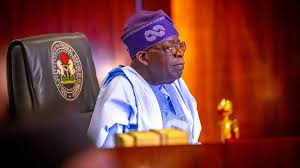

President Bola Tinubu has ordered a major, immediate overhaul of the leadership structure within Nigeria’s Armed Forces, appointing a new set of Service Chiefs in a sweeping move designed to strengthen the nation’s security architecture and consolidate command loyalty. The restructuring, announced by the President’s Special Adviser on Media and Public Communication, comes amid persistent rumours of internal discontent and so-called “coup scares” that have recently troubled public discourse.
Under the new directives, General Olufemi Oluyede takes over from General Christopher Musa as the new Chief of Defence Staff (CDS), the highest military position. Other key appointments include Major-General W. Shaibu as the Chief of Army Staff, Air Vice Marshal S.K. Aneke as the Chief of Air Staff, and Rear Admiral I. Abbas as the Chief of Naval Staff. Major-General E.A.P. Undiendeye will, however, retain his position as the Chief of Defence Intelligence.
The Economic Angle of Security Instability
While military reshuffles are a standard executive prerogative, the timing and context of this action carry significant weight, particularly when considering the broader economic environment. The constant surge in coup rumours, though repeatedly dismissed by military authorities, reflects a deeper national anxiety fuelled by severe economic hardship and pervasive insecurity.
The nexus between instability and economics is critical. Chronic security challenges—including banditry, kidnappings, and extremist violence—directly obstruct key economic activities. Agricultural production is curtailed as farmers fear for their safety, supply chains are disrupted, and vital infrastructure projects are stalled. Furthermore, a climate of political and military uncertainty severely deters both Foreign Direct Investment (FDI) and domestic capital formation, as investors value stability above all else. The recurring rumours therefore create an atmosphere of fragility that damages business confidence and inhibits long-term economic planning.
For the Tinubu administration, consolidating a loyal military command is not just a matter of political survival; it is an essential precondition for the success of its economic reforms. When the government is focusing on painful but necessary measures such as removing fuel subsidies, unifying exchange rates, and monetary policy tightening stability is crucial. The recurring security scares risk diverting attention and resources away from economic development towards crisis management, threatening to undermine the government’s ambitious growth targets and its commitment to tackling Nigeria’s high poverty and unemployment rates.
The President commended the outgoing Service Chiefs for their dedicated service and urged their successors to uphold professionalism and unity. Analysts suggest that this mass change is a deliberate, symbolic move to re-establish strong control, dispel the rumours of disunity, and project an image of stability necessary to manage the current economic transition. The success of the new military command will therefore be measured not only by their ability to quell ongoing security threats but also by their contribution to creating the stable environment necessary for economic recovery and growth.