
Africa has been called upon to take greater control of its digital future by investing more in its own digital infrastructure and reducing dependence on foreign systems.
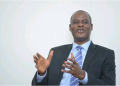
This appeal was made by Ghana’s Deputy Minister of Education, Clement Abas Apaak, during the eLearning Africa Conference held in Accra on June 9. According to him, African countries must work together to build the technology infrastructure needed to drive digital transformation and support the growth of artificial intelligence (AI) across the continent.
Apaak proposed that African governments contribute between one and two percent of their annual Gross Domestic Product (GDP) into a shared continental fund dedicated to financing digital infrastructure projects. He stressed that relying heavily on foreign-owned technology systems could limit Africa’s ability to control its digital future.
Speaking at the conference, Apaak emphasized the need for African countries to develop their own technological capabilities, train local experts, and create AI solutions that reflect African cultures, values, and history.
He questioned Africa’s digital independence, noting that many communications and digital services still pass through servers located outside the continent. According to him, true digital sovereignty can only be achieved when Africa owns and controls more of its digital infrastructure.
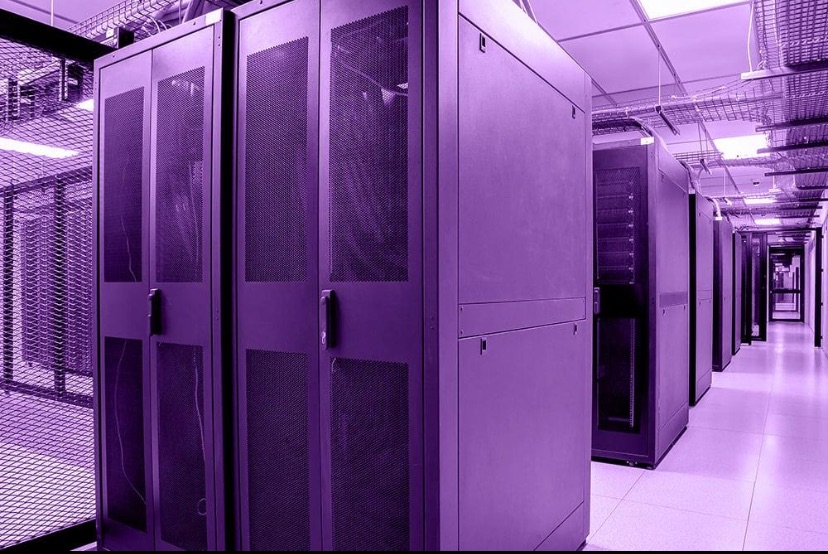
Currently, Africa operates about 307 megawatts of data center capacity, which represents less than two percent of global capacity. Data centers are critical facilities that store and process information and provide the computing power required for AI applications and cloud services.
Despite this limited capacity, demand for digital infrastructure across Africa is growing rapidly. Research firm Arizton estimates that Africa’s data center construction market, valued at $1.24 billion in 2025, could expand to $4.58 billion by 2031. This growth reflects increasing internet use, cloud computing adoption, and AI development across the continent.
Another challenge facing Africa is the shortage of Internet Exchange Points (IXPs), which help internet traffic stay within local networks and improve connection speeds. According to a study by the Coalition for Digital Africa, the continent had 63 operational IXPs across 38 countries as of 2024. Although this is an improvement from 36 IXPs in 26 countries in 2016, experts believe much more investment is needed.
The African Development Bank (AfDB) predicts that AI could add as much as $1 trillion to Africa’s economy by 2035. To support this goal, the AfDB and the United Nations Development Programme (UNDP) launched the “AI 10 Billion” initiative in February 2026. The project aims to raise $10 billion and create 40 million jobs by 2035.
In addition, stakeholders unveiled a separate $60 billion African AI Fund during the Kigali Summit in April 2025. The fund is expected to support AI startups, talent development, and computing infrastructure.
However, several obstacles continue to slow progress. Africa accounts for only about three percent of the world’s AI talent, while many skilled professionals continue to leave the continent for opportunities abroad. Furthermore, countries such as Nigeria, Kenya, South Africa, and Egypt received more than 83 percent of AI startup funding in 2025, showing that investment remains heavily concentrated in a few nations.
Energy shortages also remain a major concern. Around 600 million Africans still lack reliable electricity, making it difficult to deploy and operate advanced digital technologies on a large scale.
While global technology companies such as Google, Microsoft, Oracle, and Huawei have expanded their presence across Africa, experts caution that these investments are largely driven by commercial interests. Google launched its Johannesburg cloud region after investing $148 million, while Microsoft announced plans to invest $300 million in cloud and AI infrastructure in South Africa by 2027.
Apaak warned that unless African governments make significant investments in homegrown digital infrastructure, the continent could remain dependent on systems controlled by external organizations. He stressed that Africa’s long-term digital success depends on building infrastructure that is owned, governed, and managed within the continent itself.