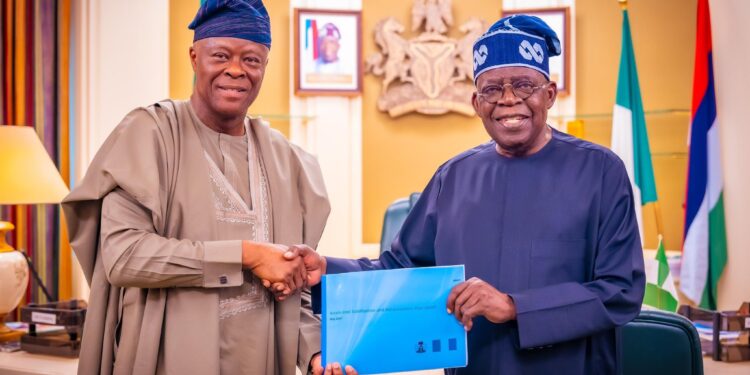

Wale Edun has pointed to notable economic progress during his time in office as he officially stepped down from Nigeria’s Federal Executive Council, following a cabinet reshuffle led by Bola Tinubu.Edun, who served as Minister of Finance and Coordinating Minister of the Economy from 2023 to 2026, was replaced by Taiwo Oyedele as part of broader changes in the administration’s economic leadership.
In his farewell remarks, Edun expressed gratitude to the president for the opportunity to serve, while highlighting what he described as measurable improvements in the country’s economic outlook. Reflecting on the period since Tinubu assumed office, he said, “Mr President assumed office with our country facing difficult economic circumstances.”He explained that through coordinated efforts across government institutions, the administration was able to implement reforms aimed at stabilising the economy and improving fiscal health. According to him, “Under his leadership, we have worked collectively across government to advance critical reforms that stabilised the macroeconomic environment, strengthened fiscal sustainability, and laid the foundation for inclusive and long-term growth.”
Edun further highlighted key outcomes of these reforms, noting improvements in economic growth and inflation trends. He stated that growth rose significantly while inflation moderated during the reform period, reflecting early gains from policy changes. His tenure coincided with major economic decisions under the Tinubu administration, including subsidy removal, exchange rate adjustments, and tax reforms. These measures, though challenging for many Nigerians, were designed to correct structural imbalances and restore long-term stability in the economy. Despite the progress cited, Edun’s exit comes at a time when Nigeria continues to grapple with high living costs, currency pressures, and broader economic uncertainties.
The cabinet reshuffle that led to his departure is seen as part of efforts to reposition the government’s economic team and sustain reform momentum. The presidency confirmed that the transition was part of a strategic adjustment within the Federal Executive Council, with Oyedele now tasked with overseeing the country’s fiscal and economic policies moving forward. In closing, Edun reaffirmed his confidence in the administration’s direction and reiterated his appreciation to Tinubu for the trust placed in him. His remarks suggest a belief that the reforms initiated during his tenure have laid a foundation for future economic stability and growth, even as the new leadership takes over to build on those efforts.