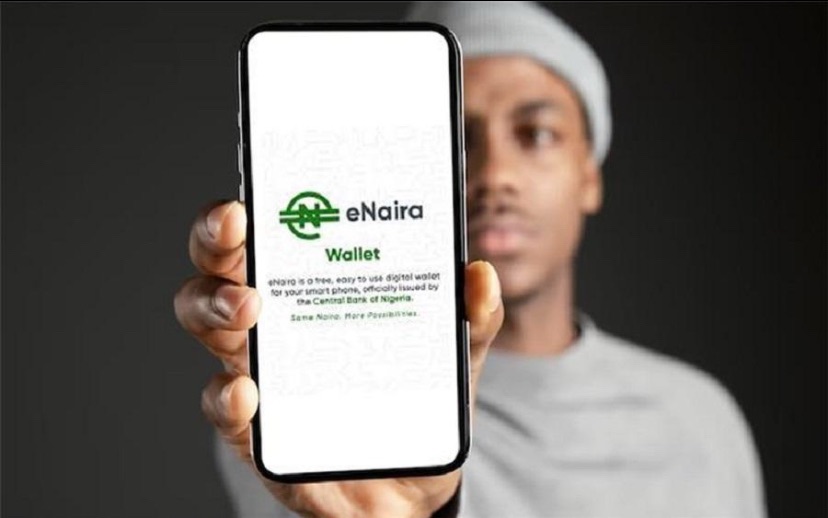

The Federal Government may in future pay salaries, pensions and some social welfare benefits through the eNaira as part of a new Central Bank of Nigeria (CBN) plan to make the digital currency a major payment channel.
The proposal is contained in the Nigeria Payments System Vision 2028 (PSV2028), a roadmap that seeks to expand the use of the eNaira and move it from a pilot project into a core payment system for both government and private-sector transactions.
The eNaira was launched in October 2021 as Africa’s first central bank digital currency. It was designed to improve financial inclusion, lower transaction and remittance costs, and support a cashless economy. However, everyday usage has remained limited.
Under PSV2028, the CBN said it will review the existing digital currency framework and define practical use cases that could make the eNaira more useful to businesses, consumers and government agencies.
Key proposed domestic uses include:
- Government-to-person payments (G2P), such as salaries, pensions and social welfare transfers
- Payroll processing
- Offline payments in areas with weak internet connectivity
- Support for micro-enterprises and small businesses
The roadmap suggests that future public-sector disbursements—including pensions, conditional cash transfers and other welfare payments—could be routed through the eNaira platform to improve speed and efficiency.
The CBN also highlighted the eNaira’s programmable money capabilities. According to the document, the digital currency could support features such as:
- Time limits on spending
- Purpose-specific payments
- Automatic payment splitting
- Creation of sub-wallets for different uses
These functions could allow payments to be restricted to specific purposes or distributed automatically among multiple recipients.
To tackle low adoption, the CBN said it plans to open application programming interfaces (APIs) so banks and fintech companies can integrate eNaira services into their platforms more easily.
The bank also wants to reposition the eNaira for:
- Government payments
- Remittances
- Trade settlement
- Cross-border payment pilots with major trade and remittance partners
CBN Governor Olayemi Cardoso said PSV2028 is intended to modernise Nigeria’s payment ecosystem by strengthening infrastructure, improving regulation, expanding digital financial services and encouraging collaboration across the industry.
Deputy Governor for Economic Policy Dr Muhammad Abdullahi added that the plan would deepen existing initiatives such as contactless payments, open banking and the eNaira while also evaluating new technologies that can expand financial services.
The CBN is proposing a much larger role for the eNaira—potentially including government salary, pension and welfare payments—but the plan is part of a roadmap, not an announced nationwide rollout. The document itself acknowledges that adoption remains low and that broader merchant, banking and fintech integration is still needed before the digital currency becomes a mainstream payment tool.
The CBN said Nigeria has already recorded millions of eNaira wallets and transactions worth about N22 billion, but admitted that the currency has not achieved widespread everyday use. The document cited limited merchant acceptance, weak integration with banking and fintech applications, and the lack of active cross-border CBDC payment corridors as major constraints.
The proposal comes as central banks worldwide continue to explore digital currencies. Industry estimates suggest that more than 130 countries are researching, testing or developing some form of central bank digital currency.
The roadmap proposes future use cases and pilots. It does not mean that salaries, pensions or welfare payments have already been switched to the eNaira nationwide. The document frames these as planned use cases and scaling initiatives, while also acknowledging that adoption remains limited and broader integration work is still needed.