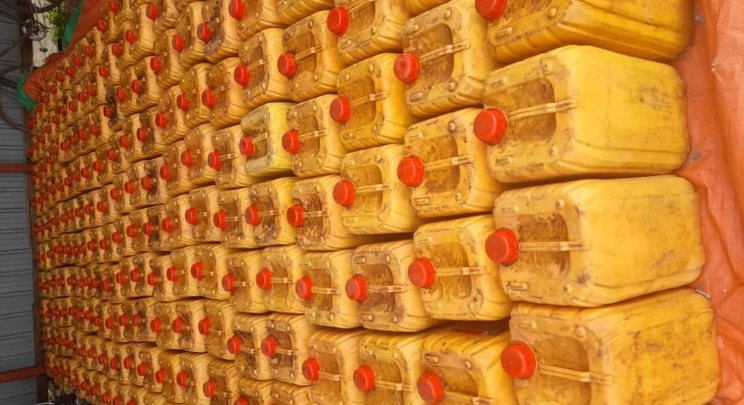

The Nigeria Customs Service (NCS) has intercepted smuggled vegetable oil products valued at approximately N1.3 billion, underscoring the agency’s intensified efforts to combat illicit trade and safeguard domestic industries from unfair competition.
The seizure forms part of a broader crackdown on the illegal importation of goods through unauthorized routes, a practice that continues to deprive the government of customs revenue while undermining local manufacturers. Customs officials disclosed that the confiscated products were intercepted during coordinated enforcement operations targeting key smuggling corridors across the country.
Authorities said the operation reflects the agency’s renewed commitment to strengthening border security and enforcing import regulations designed to protect Nigeria’s economy. Smuggling remains a significant challenge for policymakers, particularly in sectors where domestic producers face mounting pressure from cheaper, illegally imported alternatives.
Industry analysts note that the vegetable oil sector plays a critical role in Nigeria’s agricultural and manufacturing value chain, supporting thousands of jobs across farming, processing, logistics, and retail. The influx of smuggled products can distort market prices, weaken legitimate businesses, and discourage investment in local production capacity.
Customs officials emphasized that beyond revenue losses, illicit imports often bypass quality control and safety inspections, potentially exposing consumers to products that fail to meet regulatory standards. By intercepting such goods, the agency aims not only to enforce trade laws but also to protect public health and maintain market integrity.
The latest seizure comes amid broader government efforts to boost non-oil revenue generation and reduce economic leakages. The Nigeria Customs Service has intensified surveillance, intelligence gathering, and inter-agency collaboration to curb cross-border smuggling and improve compliance with import regulations.
Economic observers say sustained enforcement actions could help create a more level playing field for domestic manufacturers, particularly at a time when businesses are grappling with inflationary pressures, foreign exchange volatility, and rising production costs. Stronger border controls may also encourage greater investment in local industries by reducing the prevalence of unfair competition from illicit imports.
Market stakeholders have welcomed the development, arguing that consistent enforcement remains essential to protecting local production and supporting Nigeria’s industrialization agenda. However, experts caution that long-term success will require a combination of tougher enforcement, improved border infrastructure, and policies that address the underlying incentives driving smuggling activities.
As authorities continue to tighten oversight along Nigeria’s borders, the N1.3 billion seizure highlights both the scale of the smuggling challenge and the government’s determination to strengthen trade compliance and economic security.