
Nigeria’s public external debt is expected to increase significantly over the next two years, with the International Monetary Fund (IMF) projecting a rise of $20.7 billion by 2027, the year the country is scheduled to hold its next presidential election.
According to the IMF’s 2026 Article IV Consultation Report on Nigeria, the country’s public external debt is forecast to grow from $51.9 billion in 2025 to $66.5 billion in 2026 before reaching $72.6 billion in 2027. This represents a nearly 40 per cent increase within two years and highlights concerns about the nation’s growing debt obligations.
The IMF warned that increasing poverty levels, food insecurity, and spending demands associated with the election period could place additional pressure on government finances. These factors may lead to wider budget deficits and force the government to seek more borrowing to fund its operations.
The report also showed that Nigeria’s total external debt, including both public and private sector obligations, is projected to rise from $109.3 billion in 2025 to $132 billion by 2027. This means the country’s overall external debt could increase by about $22.7 billion during the period.
Beyond the rising debt figures, the IMF expressed concern about debt servicing costs. Interest payments on public debt are expected to increase from $2 billion in 2025 to $3 billion by 2027. At the same time, debt servicing is projected to continue consuming more than half of the Federal Government’s revenue, limiting resources available for development projects and public services.
The Fund noted that the government plans to rely more on foreign borrowing to finance future budget deficits. Part of this strategy includes a proposed $5 billion Total Return Swap arrangement with an international bank and another Eurobond issuance.
However, the IMF advised caution regarding the swap arrangement, warning that such financing structures can be complex and carry hidden risks. The Fund explained that the deal could expose Nigeria to financial losses if the naira weakens further or if the value of assets used as collateral declines.
Speaking during a virtual briefing, IMF Resident Representative for Nigeria, Christian Ebeke, described such financing arrangements as potentially opaque and urged authorities to carefully monitor associated risks. He noted that Nigeria currently has access to international capital markets and may be able to raise funds through more transparent channels such as Eurobond issuances or concessional loans.
Despite these concerns, the IMF maintained that Nigeria’s debt situation remains manageable for now. The Fund assessed the country’s risk of sovereign debt stress as moderate, noting that public debt as a percentage of GDP declined in 2025 due to stronger economic growth, naira appreciation, and improved macroeconomic conditions.
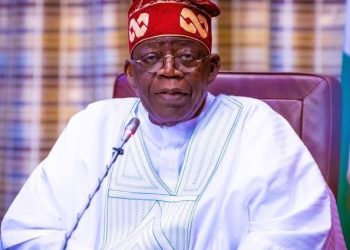
The IMF also praised economic reforms introduced by President Bola Tinubu’s administration over the past three years, saying they have strengthened the economy’s ability to withstand external shocks.
The Fund projected that Nigeria’s economy would grow by 4.1 per cent in 2026 and 4.3 per cent in 2027. It also encouraged the government to continue reforms aimed at boosting revenue generation, improving infrastructure, strengthening social welfare programmes, and supporting vulnerable citizens.
Meanwhile, former Labour Party presidential candidate Peter Obi criticised the Federal Government over rising debt levels, alleging poor fiscal management and lack of transparency. He claimed Nigeria’s total public debt has climbed to nearly N200 trillion under the current administration.
The Presidency rejected the allegation, arguing that much of the increase in debt figures resulted from the depreciation of the naira rather than excessive new borrowing. Presidential aide Dada Olusegun stated that exchange rate changes significantly affected the naira value of external debt and that the debt stock in dollar terms had remained relatively stable.
As Nigeria approaches the 2027 election season, the IMF has urged policymakers to maintain fiscal discipline, improve transparency, and avoid excessive spending that could further increase the country’s debt burden.