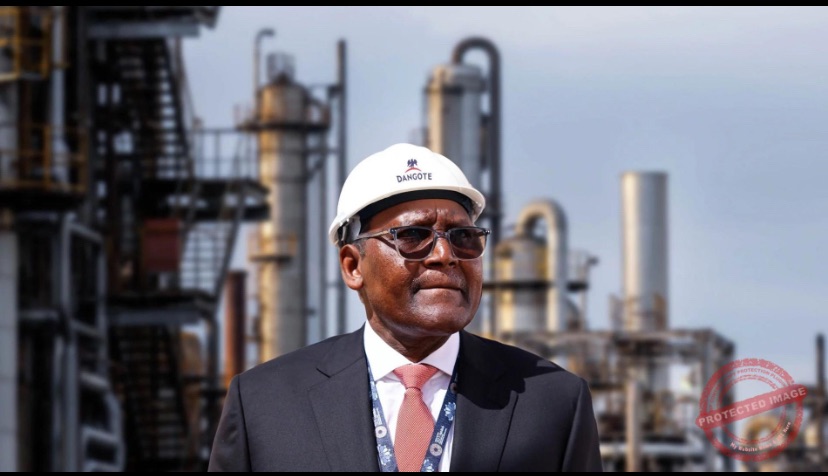

Nigeria’s Dangote Petroleum Refinery has achieved a major operational milestone after successfully increasing its crude oil processing capacity to 700,000 barrels per day (bpd), exceeding its original design capacity of 650,000 bpd.
The achievement was confirmed during a performance test conducted by the refinery’s process licensors, highlighting the facility’s growing efficiency and strengthening its reputation as the world’s largest single-train petroleum refinery.
The refinery’s ability to process more crude oil than its initial capacity demonstrates significant improvements in operational performance and engineering capability. It also marks another step forward in the company’s long-term expansion plans aimed at increasing refining output and boosting energy security across Nigeria and Africa.
Speaking on the development, the Vice President of Oil and Gas at Dangote Industries Limited, Devakumar Edwin, said the increase forms part of a broader strategy to expand the refinery’s capacity to 1.4 million barrels per day within the next 30 months. If achieved, the facility could become the largest refinery in the world.
According to Edwin, the expansion is expected to support Nigeria’s goal of becoming self-sufficient in refined petroleum products while reducing dependence on imports. It will also strengthen the country’s position as a major exporter of refined fuels to African and international markets.
Owned by Nigerian businessman and philanthropist Aliko Dangote, the refinery began fuel production in 2024 and has steadily increased output since then. The facility currently produces petrol, diesel, aviation fuel, liquefied petroleum gas (LPG), and several other petroleum products.
Over the past two years, Dangote Refinery has expanded its presence beyond Nigeria, exporting products to several African countries and major European markets, including the United Kingdom, France, Spain, Italy, and the Netherlands. The refinery has also supplied gasoline to the United States and jet fuel to Saudi Arabia, reflecting its growing importance in the global energy market.
The refinery’s role has become even more significant amid ongoing geopolitical tensions in the Middle East, which have disrupted global energy supply chains. As a result, many African countries are increasingly turning to the Dangote Refinery as a reliable source of refined petroleum products to enhance their energy security.
Further highlighting its global influence, industry data from S&P Global Commodities showed that Dangote Refinery became the world’s largest exporter of jet fuel in April. This achievement underscores the facility’s rapid rise as a major player in international fuel markets.
Within Nigeria, the refinery has helped improve fuel availability, reduce the need for imported petroleum products, and ease pressure on foreign exchange reserves. These benefits support broader national efforts to strengthen local refining capacity and maximize value from the country’s crude oil resources.
As production continues to increase, the refinery has attracted growing interest from international crude oil suppliers and commodity traders. To sustain operations, it sources crude oil from both domestic and foreign producers.
Looking ahead, Aliko Dangote has set an ambitious target of transforming the refinery into the world’s largest by 2028 with a projected processing capacity of 1.4 million barrels per day. The planned expansion is expected to create jobs, stimulate industrial growth, improve trade balances, and support manufacturing industries through the supply of essential feedstocks such as polypropylene and Linear Alkylbenzene (LAB), which are widely used in packaging and detergent production.