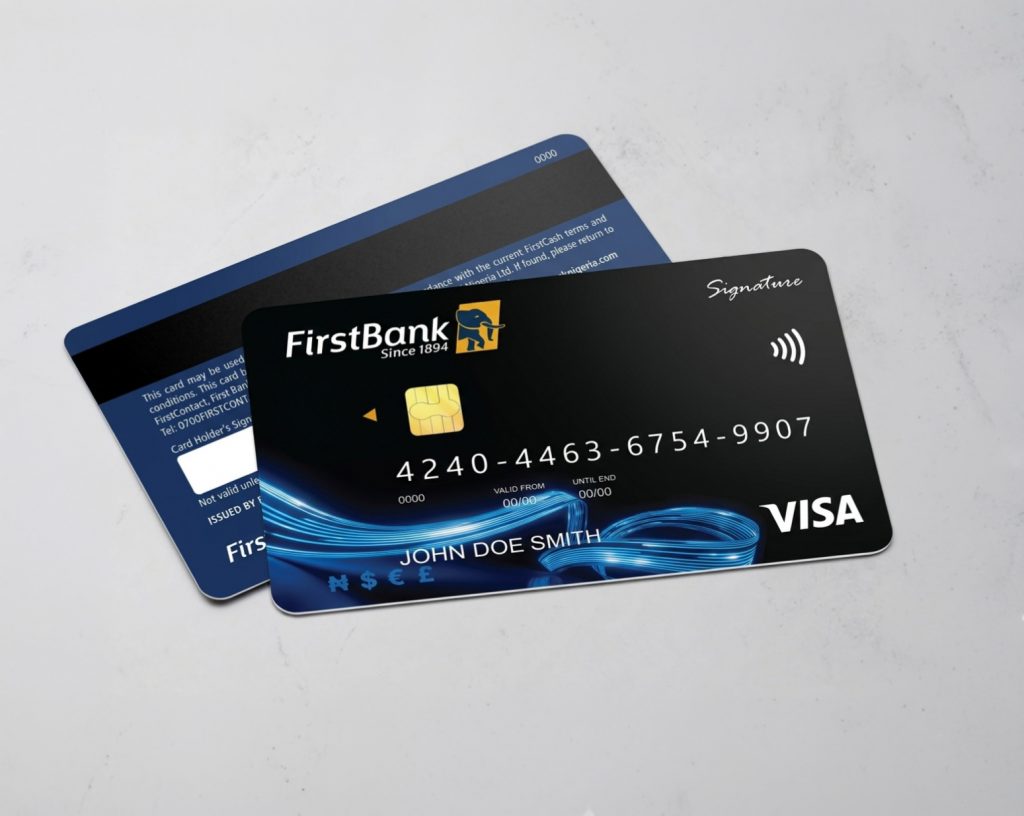

FirstBank has partnered with Visa to introduce the Visa Signature card in Nigeria, a premium financial product aimed at high-net-worth individuals seeking enhanced global payment flexibility and lifestyle benefits.
Launched in Lagos May 2026, the card marks a strategic push by both institutions to deepen penetration in Nigeria’s upper-income banking segment, where demand for cross-border financial solutions continues to rise amid expanding international travel, business diversification, and luxury consumption.
The Visa Signature card offers multi-currency functionality, enabling transactions in Naira, US Dollars, British Pounds, and Euros. This feature is designed to reduce foreign exchange friction for clients who regularly conduct international transactions or maintain diversified financial exposure across currencies. Industry analysts note that such offerings are increasingly critical in markets like Nigeria, where foreign exchange volatility has elevated demand for hedged and flexible payment instruments.
Beyond payments, the card includes a suite of premium lifestyle services. Cardholders will gain access to airport lounges across global networks, 24/7 concierge support, comprehensive travel insurance, and curated merchant discounts across international luxury and travel brands. These benefits position the product within the global premium card segment, traditionally dominated by affluent professionals, executives, and frequent flyers.
Eligible customers can apply for the card through any FirstBank branch nationwide or via dedicated relationship managers, underscoring the bank’s relationship-driven private banking model. The distribution strategy is expected to reinforce customer loyalty while expanding revenue from fee-based premium banking services.
Executives from both firms described the launch as part of a broader strategy to enhance digital payments infrastructure and deliver globally competitive banking products to Nigerian consumers. The move also reflects growing competition among financial institutions in Nigeria’s premium banking space, as banks race to capture a small but highly profitable segment of affluent clients.
Market observers suggest the introduction of the Visa Signature card could accelerate the shift toward cashless, internationally integrated banking services in Nigeria. It may also pressure rival banks to expand their own premium offerings, particularly in travel-linked financial products and multi-currency solutions.
As Nigeria’s wealth segment continues to expand, the partnership signals a broader convergence between local banking institutions and global payment networks aiming to serve increasingly mobile and internationally connected clients.