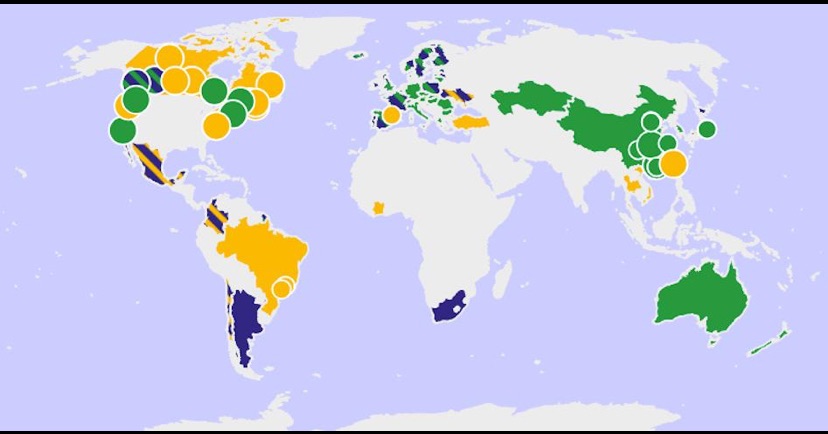

Global income generated from carbon pricing systems rose above $107 billion in 2025, according to a new report released by the World Bank.
The report, titled *2026 State and Trends of Carbon Pricing*, showed that governments around the world are increasingly using carbon taxes and emissions trading systems to fight climate change and raise funds for environmental projects.
According to the report, global carbon pricing revenues grew by about 2% in 2025, continuing a steady increase recorded over the past decade. In 2016, global earnings from carbon pricing were below $30 billion, but the figure has remained above $100 billion yearly since 2021.
The World Bank explained that the growth reflects stronger global commitment to climate action under the Paris Agreement. Many countries are now expanding policies that place a price on carbon emissions in order to reduce pollution and encourage cleaner energy use.
The report also highlighted the rapid growth of emissions trading systems, commonly known as ETSs. These systems allow companies to buy and sell emission permits while governments set limits on pollution levels.
In 2016, emissions trading systems covered only about 8% of global greenhouse gas emissions. By 2025, that number had increased to more than 24%, showing how quickly countries are adopting market-based climate policies.
However, the report noted that carbon taxes have not expanded at the same pace. Carbon tax coverage has remained relatively stable, covering around 4% to 5% of global emissions.
Most of the money generated from carbon pricing still comes from developed countries because they operate more advanced emissions trading systems and often impose higher carbon prices. Many developing and middle-income nations are still working on building effective carbon market structures.
The report mentioned that Japan recently launched its GX-ETS system, which is expected to support the country’s clean energy transition and decarbonisation projects. The World Bank also predicted that more countries, including India, Japan, and Viet Nam, will expand their national carbon trading systems from 2026 onward.
In Nigeria, the Federal Government has increased efforts to develop a functioning carbon market as part of its energy transition and climate plans.
In January 2026, President Bola Ahmed Tinubu approved the operationalisation of Nigeria’s national carbon market framework. Authorities believe the initiative could position Nigeria as one of Africa’s leading carbon credit markets.
The government projects that Nigeria’s carbon market could generate at least $3 billion annually by 2030 through carbon credit trading and climate-related investments.
Earlier in November 2025, the Federal Government also announced plans to attract up to $3 billion yearly in climate finance through the National Carbon Market Framework and Climate Change Fund.
Experts say Nigeria has strong potential to benefit from the fast-growing global carbon economy due to its large forest reserves, renewable energy opportunities, and expanding clean energy sector.
Analysts believe carbon markets can provide alternative income sources for developing countries while also creating jobs, attracting investment, and encouraging technology transfer.
However, industry stakeholders have warned that Nigeria must establish strong regulations, transparent carbon credit systems, and reliable emissions monitoring to gain international trust and attract investors.
Climate finance advocates also believe stronger participation by African countries in global carbon pricing systems could help bridge funding gaps needed for climate adaptation and long-term environmental sustainability across the continent.