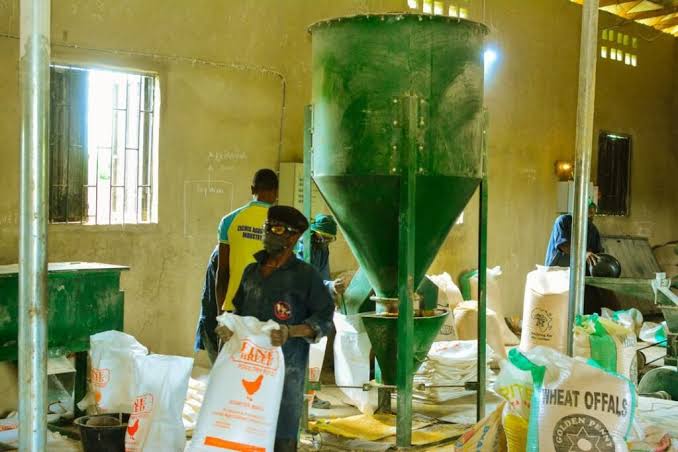

Nigeria’s growing livestock industry is driving fresh investment in feed manufacturing, as agribusiness company Zichis moves to significantly expand production capacity in pursuit of higher revenue and market share.
The company said it is targeting monthly earnings of N540 million following a scale-up of its animal feed operations, positioning itself to benefit from rising demand from poultry, fishery, and livestock farmers grappling with persistent supply shortages and elevated feed costs.
The expansion reflects broader momentum across Nigeria’s agricultural value chain, where operators are increasingly investing in local production to reduce dependence on imports and improve food security. Animal feed remains one of the largest cost components in livestock farming, accounting for as much as 70% of poultry production expenses, according to industry estimates.
Zichis said the upgraded production capacity would allow the company to increase output volumes while improving operational efficiency and distribution across key agricultural markets. The move comes as feed manufacturers face mounting pressure to stabilize prices amid inflationary trends, currency volatility, and rising raw material costs.
Industry analysts say the company’s revenue projection underscores the commercial potential within Nigeria’s expanding protein market, particularly as urbanisation and population growth continue to boost consumption of poultry, fish, eggs, and dairy products.
The investment also highlights intensifying competition among feed mill operators seeking to capture demand from smallholder farmers and commercial livestock producers. Companies are increasingly modernising facilities, adopting automated systems, and strengthening supply chains to maintain profitability in a challenging operating environment.
Nigeria’s agricultural sector has attracted renewed investor attention in recent years as policymakers push for domestic production and import substitution. However, operators continue to contend with high energy costs, logistics bottlenecks, insecurity affecting farming communities, and fluctuating grain prices.
For livestock farmers, improved feed availability could help moderate production costs at a time when many businesses are struggling with thinning margins. Higher-quality feed products are also expected to improve productivity and animal health, potentially increasing output across the agricultural value chain.
Market observers say sustained investment in feed production may become critical to Nigeria’s long-term food security ambitions, especially as the country seeks to reduce pressure on food imports and strengthen domestic agribusiness capacity.
If achieved, Zichis’ N540 million monthly earnings target would mark a significant milestone for the company and reinforce confidence in the commercial viability of Nigeria’s fast-growing agribusiness sector.