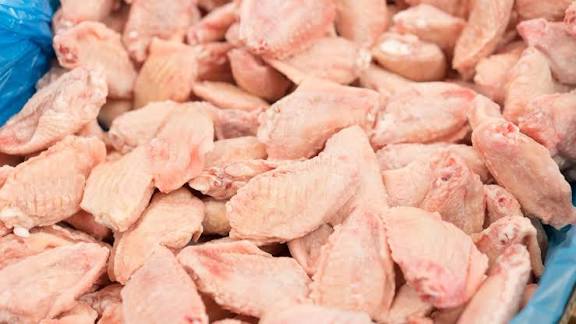

Nigeria’s decades-long restriction on imported frozen chicken and turkey is facing renewed implementation hurdles, exposing deep structural weaknesses in border enforcement, local poultry production, and food supply chains.
The ban, originally designed to protect domestic poultry farmers and stimulate local production, has struggled to achieve its intended impact as smuggling networks continue to move large volumes of frozen poultry products into the country through porous land borders and informal trade routes.
Industry stakeholders say the persistence of illegal imports is undermining local producers already grappling with rising feed costs, currency depreciation, and high energy prices. Poultry operators argue that the unchecked inflow of cheaper imported products is eroding profitability and discouraging investment in the sector.
Nigeria’s poultry industry is one of the largest agricultural employers in the country, supporting millions of jobs across farming, feed production, logistics, and retail. However, operators say capacity utilisation remains below potential due to inconsistent policy enforcement and mounting production costs.
The renewed concerns come as food inflation continues to pressure household incomes. Chicken and turkey remain important protein sources for many Nigerians, but local production shortages and elevated costs have pushed retail prices sharply higher over the past year.
Analysts say authorities face a difficult balancing act between protecting domestic producers and ensuring affordable food supply for consumers. While import restrictions are intended to strengthen local industry, weak infrastructure, limited access to finance, and insecurity in farming regions continue to constrain productivity.
Border communities and traders also report that enforcement efforts have become uneven, with periodic crackdowns often followed by resurgent smuggling activity. Security experts note that illegal frozen food imports have evolved into an organised cross-border trade network involving multiple actors across West Africa.
Economists warn that without broader reforms, bans alone may not deliver long-term industrial growth. Instead, they argue that Nigeria must improve cold-chain logistics, reduce transportation bottlenecks, stabilise foreign exchange conditions, and expand access to affordable agricultural financing.
Some consumer groups have also questioned whether the prolonged restrictions have significantly improved food affordability or self-sufficiency. They contend that local production still falls short of national demand, leaving supply gaps that smugglers continue to exploit.
Poultry associations, meanwhile, are calling for stronger surveillance at border corridors, tougher penalties for illegal importation, and targeted government support for domestic farmers. They argue that improving local competitiveness rather than relying solely on import bans will be critical to achieving sustainable growth in the industry.
The developments underscore broader tensions within Nigeria’s trade and agricultural policies as authorities attempt to reduce import dependence while managing inflationary pressures and food security concerns in Africa’s largest economy.