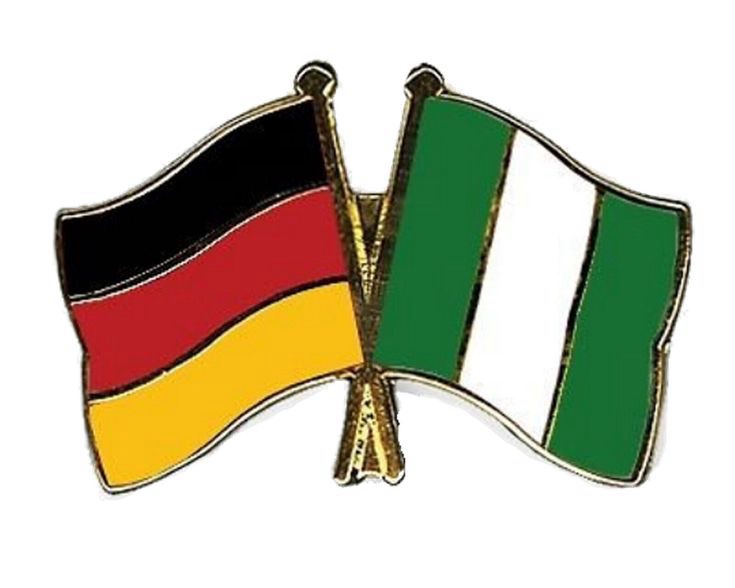

Nigeria and Germany have entered into a new €365 million development and investment partnership aimed at supporting Nigeria’s economy, energy sector, agriculture, and private businesses.
The agreement was officially signed at the German Embassy in Abuja by Nigeria’s Minister of Budget and Economic Planning, Senator Abubakar Bagudu, Minister of State for Budget and Economic Planning, Dr. Doris Uzoka-Anite, and senior German government officials.
According to the Federal Ministry of Budget and Economic Planning, the partnership includes a €65 million financial and technical cooperation package from Germany. It also features a €300 million Export Credit Guarantee financing framework designed to encourage investments and provide long-term funding for major projects in Nigeria.
Speaking during the signing ceremony, Uzoka-Anite described the agreement as an important step in strengthening relations between both countries. She explained that the partnership goes beyond normal diplomatic cooperation and is focused on improving the lives of Nigerians through investment, innovation, and sustainable development.
She added that Nigeria and Germany agreed to work closely in several important sectors, including agriculture, renewable energy, climate action, healthcare, skills development, and economic growth.
The minister noted that the agreement comes at a time when Nigeria is implementing major economic reforms under President Bola Tinubu’s administration. According to her, these reforms are necessary to create long-term prosperity and attract more foreign investment into the country.
Uzoka-Anite also explained that all programmes under the partnership would align with Nigeria’s National Development Plan 2026–2030 and the country’s long-term Agenda 2050 strategy.
German Ambassador to Nigeria, Annett Günther, said the agreement followed several discussions between both nations aimed at reviewing progress and building stronger future cooperation.
She revealed that representatives from nine Nigerian ministries, German development agencies such as BMZ, GIZ, and KfW, members of the diplomatic community, European Union officials, and other development partners participated in the negotiations leading to the agreement.
The Deputy Director General of Germany’s Federal Ministry for Economic Cooperation and Development, Philip Knill, described Nigeria as a major force in Africa and an important partner for economic growth, peace, and regional stability.
Knill said German officials held meetings with both Nigerian and German companies during the visit to discuss opportunities in sectors such as electricity, agriculture, technology, and industrial development.
He disclosed that top German companies including Siemens, SAP, Bayer, and STIHL are already exploring investment opportunities in Nigeria, especially in industrialisation, digital technology, agriculture, and energy projects.
Knill also praised Nigeria’s ongoing economic reforms, especially changes in foreign exchange policies, tax reforms, and food security programmes. According to him, these reforms are helping to improve investor confidence and attract long-term investments into Nigeria.
He further announced that Germany’s Ministry for Economic Affairs and Energy had approved a €300 million export credit line to strengthen trade and investment between both countries.
Highlighting previous successes from Nigeria-Germany cooperation programmes, Knill said more than 16,000 small and medium-sized businesses had experienced income growth through joint initiatives.
He also revealed that around 600,000 smallholder farming households benefited from agricultural training programmes that improved productivity and increased incomes by as much as 90 percent.
In the energy sector, over 70,000 Nigerians are reportedly benefiting from mini-grid electricity projects supported under the partnership.
Knill reaffirmed Germany’s support for Nigeria’s Presidential Power Initiative in collaboration with Siemens. The project aims to increase Nigeria’s electricity grid capacity to 25 gigawatts and provide cleaner and more reliable power supply for millions of Nigerians.
The signing ceremony ended with both countries promising to strengthen cooperation further and ensure that the partnership delivers measurable economic and social benefits for Nigerians.