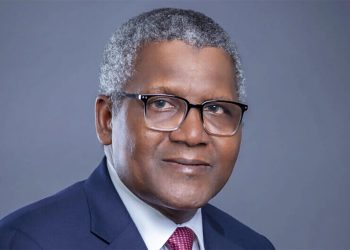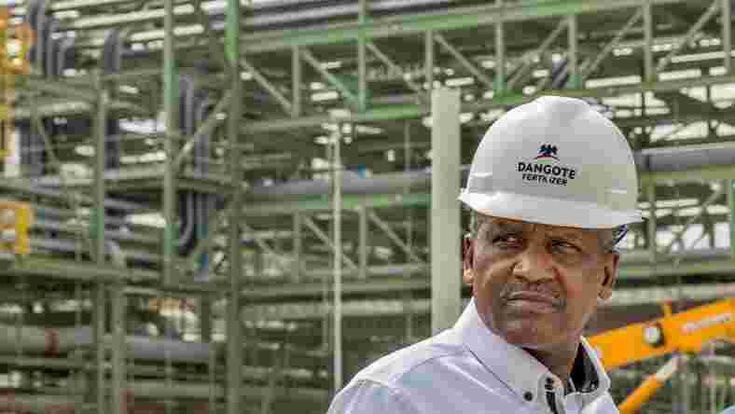

Alhaji Aliko Dangote, President of the Dangote Group, has revealed that his company rejected attempts by the Nigerian National Petroleum Company Limited (NNPC) to increase its ownership stake in the Dangote Petroleum Refinery.
Dangote made this known during an interview with Nicolai Tangen, Chief Executive Officer of the Norwegian Sovereign Wealth Fund. According to him, the decision was taken because the refinery plans to open its ownership to more Nigerians through a future public listing.
The NNPC currently owns 7.25 per cent of the refinery after paying $1bn for the stake in 2021. The company had earlier planned to increase its ownership to 20 per cent, but later decided not to complete the deal.
Dangote explained that the refinery’s management wants broader participation from Nigerians rather than allowing one institution to control a larger share.
He also identified policy inconsistency and instability in government decisions as one of the major risks facing businesses in Nigeria. However, he noted that there was no immediate fear of civil unrest in the country.
The billionaire businessman further disclosed that future investors in the Dangote Group businesses would receive dividends in dollars because most of the company’s earnings now come from exports. According to him, about 80 per cent of future revenues are expected to be earned in foreign currency.
Dangote stated that the refinery project received financial support from several local and international institutions, including Afreximbank, Africa Finance Corporation, Zenith Bank, Access Bank, UBA, Standard Bank of South Africa, and Standard Chartered Bank UK.
He said the group initially intended to finance the project largely through internally generated funds, but naira devaluation forced the company to seek additional external support.
Speaking about his personal sacrifices, Dangote said he sold his luxury properties in the United States and the United Kingdom so he could fully focus on building industries in Nigeria.
According to him, his investment philosophy is based on producing goods that Nigerians consume daily instead of relying on imports. He described this strategy as “backward integration.”
Meanwhile, fresh industry data showed that petrol supply from local refineries increased significantly in the first quarter of 2026, largely driven by the Dangote refinery.
Figures from the Nigerian Midstream and Downstream Petroleum Regulatory Authority showed that local refineries supplied about 3.18 billion litres of petrol between January and March 2026. During the same period, fuel imports dropped sharply to 965.52 million litres.
This means that local refining accounted for over 76 per cent of Nigeria’s petrol supply during the quarter, while imports made up just over 23 per cent.
The report also estimated that Dangote refinery supplied over N3.2tn worth of petrol locally during the period, based on an average ex-depot price of about N1,000 per litre.
Despite the growth in local refining, overall petrol supply slightly declined compared to the same period in 2025, suggesting that increased local production has not yet completely solved supply challenges.
Dangote also revealed that the refinery is currently processing about 661,000 barrels of crude oil daily, above its original 650,000 barrels-per-day capacity.
He added that rising global tensions, especially the conflict involving the United States and Iran, have boosted demand and prices for products such as fertiliser, jet fuel, and polypropylene, increasing revenue for the group.
The businessman further disclosed plans to expand operations aggressively over the next few years. According to him, the group aims to generate $100bn in revenue by 2030 and increase refinery capacity to 1.4 million barrels per day within the next 30 months.
Dangote claimed that certain powerful interests benefiting from fuel importation and subsidy payments had attempted to frustrate the refinery project, but said the company had successfully overcome those challenges.