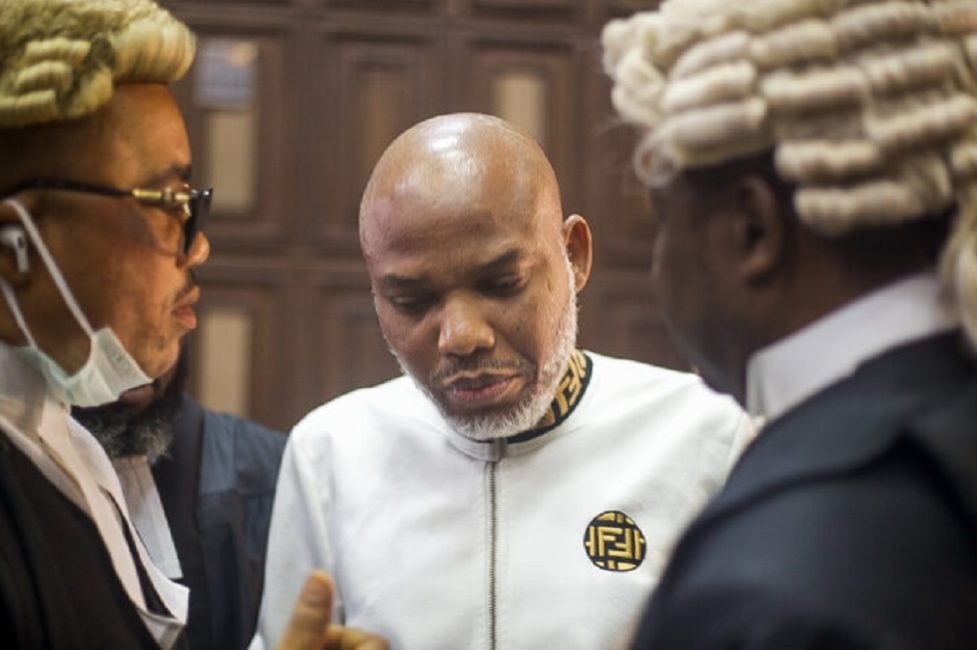

The ongoing detention of separatist leader Nnamdi Kanu sparked widespread disruption and tension in Nigeria’s Federal Capital Territory, Abuja, this week, as a mass demonstration demanding his release led to major traffic chaos and clashes with police. Economic and social life in the city was severely affected on Monday, following the #FreeNnamdiKanuNow protests, which were spearheaded by activist Omoyele Sowore. The rally was organised to press for the unconditional release of Mr Kanu, who leads the proscribed Indigenous People of Biafra (IPOB) movement, a group advocating for the secession of Nigeria’s south-east region.
The planned protest quickly brought significant portions of the capital to a virtual standstill. Major road networks, including those serving the densely populated satellite towns, experienced severe gridlock and roadblocks from the early hours of the day. This paralysis dramatically impacted thousands of residents, with commuters left stranded at bus stops across the city. Commercial taxi and bus operators, exploiting the tight traffic conditions and scarcity of vehicles, seized the opportunity to drastically hike fares by more than 100 per cent in many areas. Journeys that typically cost a minimal amount suddenly became prohibitively expensive, forcing countless civil servants and traders to abandon their trips or embark on long, exhausting walks to reach their destinations. Many workers reported arriving late to their offices, while others, like one trader at Wuse Market, lamented the outrageous amounts being demanded for a space in the few available vehicles. The disruption was so extensive that even major ride-hailing services reportedly suspended operations in parts of the city, citing concerns over safety.
In anticipation of the demonstration, a heavy security presence had been deployed to strategic locations across the capital, including near the Presidential Villa, the Federal Secretariat, and the Unity Fountain. Security operatives, including the Nigeria Police Force and armed soldiers, were observed patrolling with armoured trucks and equipped with water cannons. Despite organisers calling for a peaceful rally, the day escalated into a tense confrontation as police sought to suppress the action. Security forces used tear gas and water cannons to disperse the hundreds of demonstrators attempting to converge on key government institutions. Eyewitness reports and journalists’ accounts detailed pockets of clashes and, in some instances, the sound of gunshots as police moved decisively to quell the protests. This crackdown led to the arrest of dozens of demonstrators, including a prominent lawyer representing Mr Kanu, Aloy Ejimakor. An international journalist from the Agence France-Presse (AFP) was also briefly detained, and his equipment reportedly destroyed during his altercation with security personnel, though he was released shortly afterwards.
The protest proceeded despite a recent attempt by the Nigeria Police Force to obtain an interim court order to prevent it from taking place near sensitive government buildings. The Federal High Court in Abuja, however, declined to grant the ex-parte motion, ruling that it would not issue the injunction without first hearing from the protest’s conveners. Mr Kanu, who holds British citizenship, has been held in detention since his arrest in 2021 and is currently facing trial on seven counts of terrorism and treason. His supporters, however, insist that his continued incarceration is a politically motivated violation of his fundamental rights, particularly as courts have previously ordered his release. The police’s aggressive handling of the demonstration marks a significant escalation in the authorities’ response to the persistent, high-profile agitation for the separatist leader’s freedom.