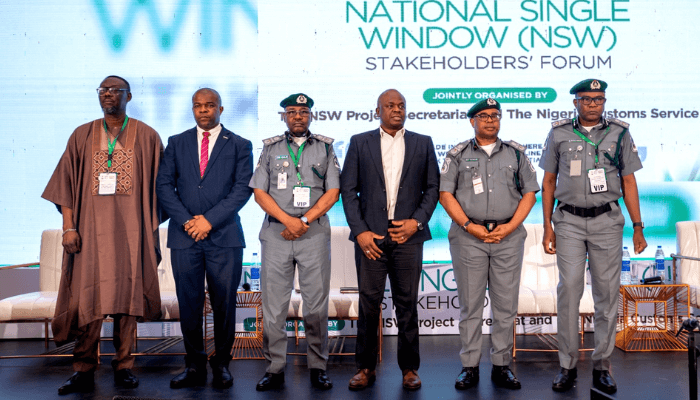

The Nigerian Federal Government is accelerating the implementation of the National Single Window (NSW) project, a pivotal trade reform intended to achieve a $1 trillion economy by 2030. President Bola Ahmed Tinubu has set a firm deadline for the platform to be fully operational by the first quarter of 2026. To ensure national compliance and support, the NSW Secretariat and the Nigeria Customs Service (NCS) recently conducted a key sensitisation workshop in the South-East and South-South regions to secure critical buy-in from all stakeholders.
The current push is significant because the NSW is not a new initiative; past efforts to launch a centralised digital trade system in Nigeria, around 2009/2010 and again in 2012/2013, failed due to a lack of institutional alignment and political continuity. By reviving the project in April 2024, the government is aligning Nigeria with international best practices. The Single Window system is a global trade facilitation standard, defined by the UNECE and advocated by the World Trade Organisation (WTO) Trade Facilitation Agreement (TFA), which aims to simplify and digitise cross-border trade processes, drawing inspiration from successful models in countries like Singapore.
Fundamentally, the NSW is designed to be a “one-stop-shop” digital platform. Instead of submitting documents to numerous government agencies, including Customs, ports, and regulatory bodies, traders will submit all required information, permits, and declarations once. Tola Fakolade, Director of the NSW Secretariat, highlighted that this centralised system will not only streamline processes but also enhance transparency and eliminate much of the person-to-person contact that creates opportunities for corruption and bureaucratic delays.
The economic rationale for the NSW is compelling. Government estimates project that the fully operational platform could help curb an estimated $3 billion to $4 billion in annual revenue leakage at the ports. Furthermore, this streamlining is anticipated to drastically reduce the cost of logistics in Nigeria by as much as 25% to 30%, making Nigerian businesses more competitive on the global stage.
At the sensitisation event, leaders from the sector, including Kingsley Igwe of the Council for the Regulation of Freight Forwarding in Nigeria (CRFFN), endorsed the system as a necessary evolution for trade efficiency. Customs Comptroller General Bashir Adeniyi, represented by Assistant Comptroller General Kamal Mohammed, emphasized that the project’s success is not the responsibility of a single agency but requires the strong collaboration of all parties. Industry leaders, such as Emeka Nwokeoji of ANLCA and Pius Akutah of the Nigeria Shippers Council, echoed this sentiment, underscoring that unified effort is essential to meet the 2026 deadline and successfully transform Nigeria into a competitive and transparent trade destination.