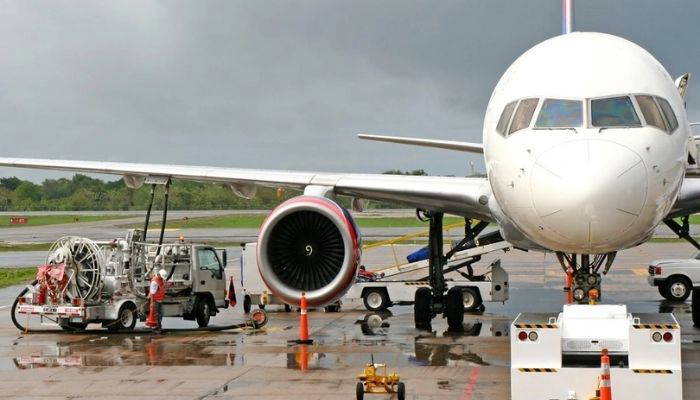

Despite efforts by regulators to stabilise aviation fuel prices in Nigeria, middlemen in the supply chain have continued to push costs higher, worsening the financial strain on airlines.
The Nigerian Midstream and Downstream Petroleum Regulatory Authority (NMDPRA) had earlier introduced a pricing guideline to control the rising cost of Jet A1, also known as aviation fuel. The regulator recommended that prices should fall within a specific range based on market realities. In Lagos, the expected price band was between ₦1,760 and ₦1,988 per litre, while Abuja’s benchmark was slightly higher, reaching about ₦2,037 per litre. However, recent findings show that the actual market price has gone far beyond this range. Airlines are reportedly still buying fuel at around ₦2,230 per litre or even higher, indicating that the regulator’s guidance is not being strictly followed.
The gap between the recommended and actual prices is largely blamed on intermediaries within the fuel distribution chain. These middlemen purchase fuel from depots and resell it to airlines at significantly marked-up prices. Their activities continue to inflate costs, making it difficult for airlines to benefit from the lower ex-depot rates.
For instance, the Dangote refinery is said to sell Jet A1 at around ₦1,800 per litre at the gantry level. But by the time the product passes through several layers of distributors, the final price rises sharply before reaching airline operators. Industry experts say this system lacks transparency and allows excessive profit-taking. They argue that the involvement of multiple parties between production and end-users creates opportunities for price manipulation. As a result, airlines are forced to absorb high operational costs, which could eventually affect ticket prices and overall service delivery.
An industry stakeholder, Olatide Jeremiah, stressed the need for more openness in pricing. He noted that if the refinery publicly releases its daily price data, it could help reduce arbitrary markups and limit the influence of middlemen. According to him, greater transparency would discourage inflated pricing and protect businesses within the aviation sector.
The ongoing situation also highlights broader structural challenges in Nigeria’s downstream petroleum sector. Although fuel pricing is largely deregulated and influenced by market forces, inefficiencies in distribution continue to distort the intended benefits of competition. Stakeholders warn that unless these bottlenecks are addressed, the aviation industry may continue to struggle with high fuel costs. This could lead to increased airfares, reduced flight operations, or even disruptions across the sector.
Ultimately, while regulatory interventions aim to stabilise prices, their effectiveness remains limited without stricter monitoring and reforms in the supply chain. Addressing the role of intermediaries and improving direct supply mechanisms may be key to ensuring that pricing guidelines translate into real relief for airlines and passengers alike.