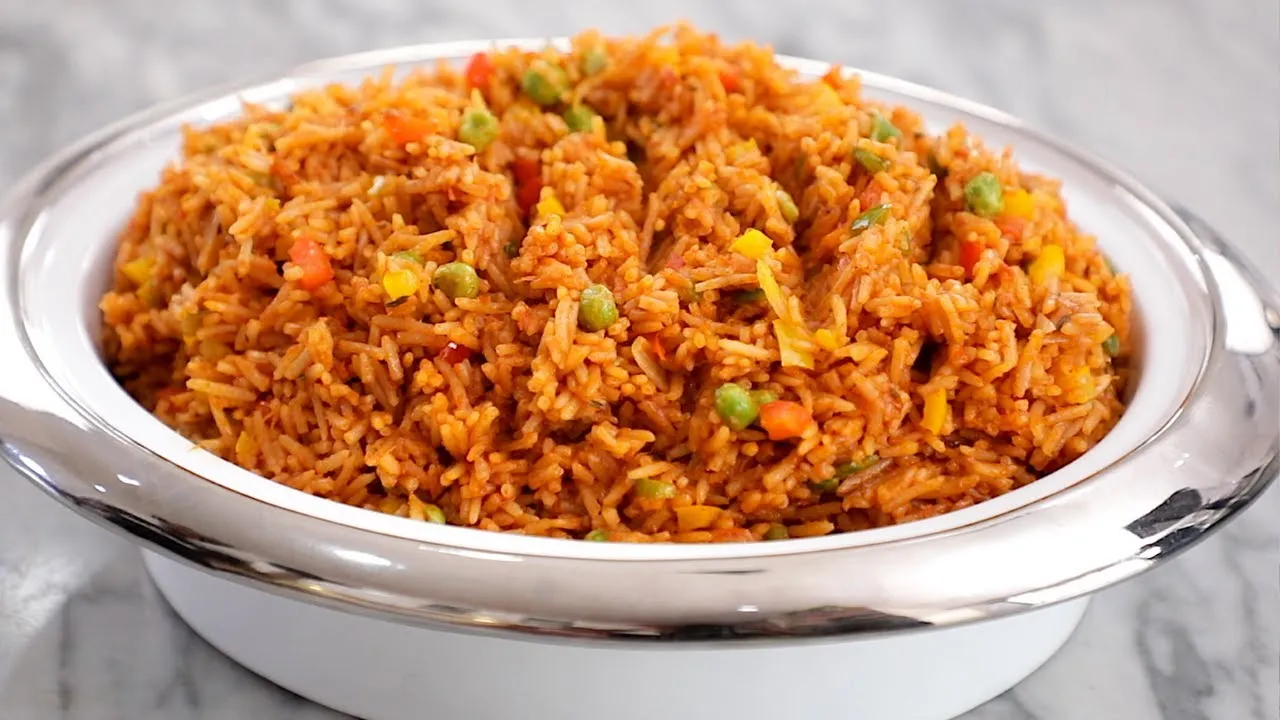

The SBM Jollof Index, released on 30 April, has completed its tenth year of tracking what it costs to put a pot of rice on a Nigerian family’s table. The latest number is Ṇ30,435 for a family of five. That is a 19.4 percent jump in just six months, and the highest since the index began. To understand what this means for ordinary Nigerians, you have to look not just at the war in Iran that pushed fuel prices through the roof, but at the decade of policy fractures that made the pot so vulnerable in the first place.
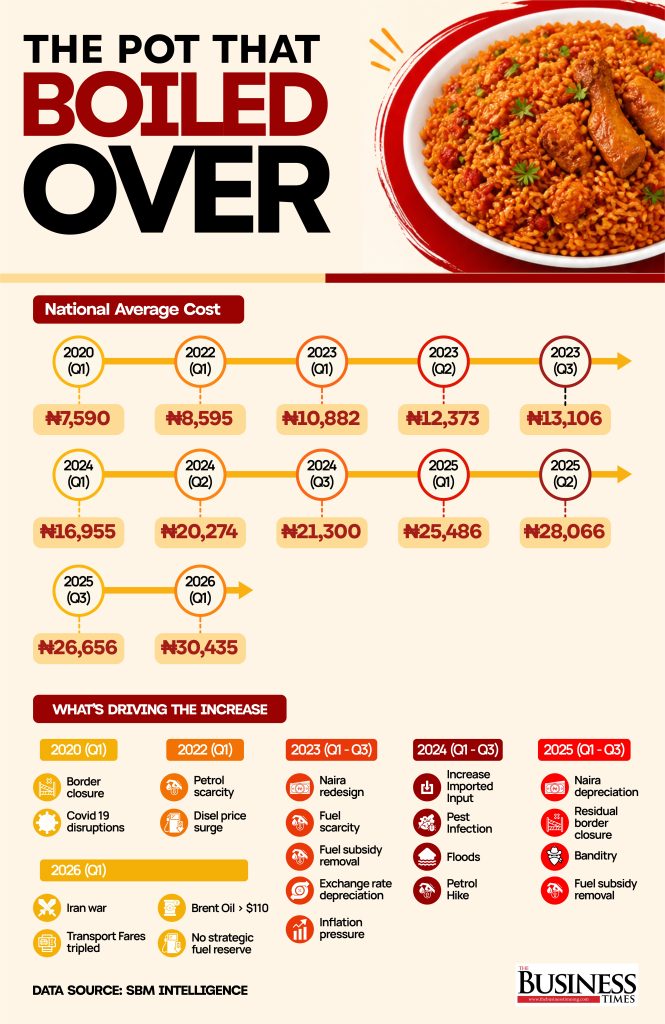
The immediate trigger is no secret. When U.S. and Israeli strikes hit Iran on 28 February, global oil prices shot from the low $70s to over $110 per barrel within weeks. Nigeria, which sells crude abroad but buys nearly all its refined fuel back, absorbed the shock like a punch to the gut. Petrol in Lagos nearly doubled to ₦1,325 a litre; in Abuja it climbed to ₦1,367. Diesel, the fuel of trucks, cold rooms, and generators, surged past ₦1,500. Transport fares tripled on some routes. A single truck carrying grain from Kano to Lagos now costs ₦70,000, up from ₦45,000.
Every single ingredient in the jollof basket – rice, vegetable oil, turkey, beef, tomatoes, pepper, onions, seasoning – became more expensive to move, store, and sell. The Jollof Index caught the wave in real time. Port Harcourt saw the steepest six‑month climb, a staggering 55.1 percent, pushing its pot to ₦31,650. Kano followed closely with a 53.8 percent rise, though its prices flatlined in March – not because conditions improved, but because customers could no longer pay. Lagos markets spiked 23 percent in March alone. Abuja’s Wuse II, the most expensive market in the country, hit ₦36,750.
A decade of climbing prices
But the war was only the spark. The Jollof Index has been climbing for years, and its historical records read like a diary of Nigeria’s economic traumas. In early 2020, a pot cost ₦7,590. By early 2022, it was ₦8,595. By early 2023, before the subsidy removal, it had reached ₦10,882. Then came the fuel subsidy removal and the naira devaluation in mid‑2023, and the pot jumped to ₦12,373, then ₦13,106, then ₦16,955 by early 2024. Each crisis – the border closure, COVID‑19, the 2022 floods, the naira redesign cash crunch, the farmer‑herder conflicts – left a scar. The Iran war did not start the fire; it just poured fuel on it.
When you strip away the naira’s fluctuations and look at the dollar cost, the picture is even more striking. In early 2023, a Nigerian family needed $14.49 to cook a pot of jollof. Today, that same pot costs $21.93. That is a real‑term increase of more than 50 percent in just three years. The SBM dollar‑denominated index, which uses the first quarter of 2023 as its base of 100, now stands at 151.3 – the highest ever. Nigeria’s food inflation is not just rising; it is hardening fast.
Survival strategies across the country
Behind these numbers are millions of Nigerians who have turned daily life into a negotiation with rising prices. A civil servant living in Nyanya told researchers that the money he used to stretch for a week no longer covers the same food. His family has cut down on portions and sometimes skips meals altogether. In Gwagwalada, a mother of four described how she now buys tomatoes and pepper in small cups rather than the traditional mudu measure, because buying in bulk is no longer possible. Feeding a large family, she said, has become a daily struggle.
Traders are feeling the squeeze from both sides. A seller in Lagos explained that people still come to the market, but they leave with far less than they planned. There is foot traffic, but not enough money changing hands. A tomato seller in Gwagwalada added that he and his colleagues are not happy raising prices, but they have no choice. Transport costs have soared, and storage has become expensive. When a customer asks why prices keep going up, he can only point to the fuel pump.
The impact on festive periods has been brutal. One Lagos resident spoke about Easter, noting that his family could not afford a whole chicken. They celebrated quietly, he said, and hoped things would improve. Across the country, families have changed what they eat. Meat has become a luxury. Smoked dry fish or crayfish now provide the protein. Cooking gas is too expensive, so many households have switched to charcoal pots for their main meal. People trek to neighbourhood shops to avoid transport fares. Some have started planting vegetables and yams in their backyards.
These are not temporary hacks. They are the new rhythms of survival.
Why some regions hurt more than others
The national average of ₦30,435 hides deep regional disparities. Port Harcourt’s 55 percent surge is the worst in the country. The port city paradox – a coastal hub with expensive food – is explained by its diesel‑dependent cold rooms, which saw operating costs explode when diesel topped ₦1,500, and by the long‑standing ban on imported frozen chicken, which forces consumers toward costly local alternatives.
Kano’s index has climbed 54 percent since September 2024. But in March, prices stopped rising. That is not a sign of relief. A cosmetics seller in Kano told researchers that her customers have stopped buying beauty products because they need every naira for food. When jollof rice becomes this expensive, the entire household budget contracts. The market does not crash; it goes quiet.
Lagos, Nigeria’s commercial capital, saw the sharpest monthly acceleration in March. Trade Fair and Balogun markets jumped by nearly a quarter in four weeks. A short bus trip from Ketu to Maryland now costs almost double what it did before the war. The long‑held belief that Lagos is somewhat insulated from national food inflation has evaporated. The cost of moving goods from the ports to inland markets has risen so fast that even Ibadan, once a cheaper alternative, has converged upward.
The Southeast recorded small declines in March. Awka and Onitsha pots fell by about 2 percent. But the relief is fragile. A wholesale trader in Onitsha told researchers that she has stopped restocking entirely. She is selling what she has left on her shelves. Once that is gone, she plans to close the shop for a while. There is no point buying at today’s prices, she explained, because no one will buy from her at tomorrow’s prices. That is inventory collapse in slow motion.
What the pot tells us about policy
The SBM Jollof Index has been publishing for ten years, and its editors note that the Iran war was the trigger, not the cause. The underlying conditions have been deteriorating for a decade. Nigeria has no strategic fuel reserve, so every global oil shock hits pump prices immediately. The country’s food‑producing regions remain dangerous, plagued by banditry and farmer‑herder violence. The road network is a tax on every grain that moves. And for years, monetary policy has often focused on defending the naira at the expense of making food affordable.
The housewife in Lagos who told researchers, “I want the government to make a full pot of jollof rice totally affordable,” was not asking for charity. She was describing the baseline of a dignified life. For millions of Nigerian families, that baseline is receding. The jollof pot has become the most honest ledger of policy failure and household resilience. The only question now is whether Abuja is ready to read what is written in it.