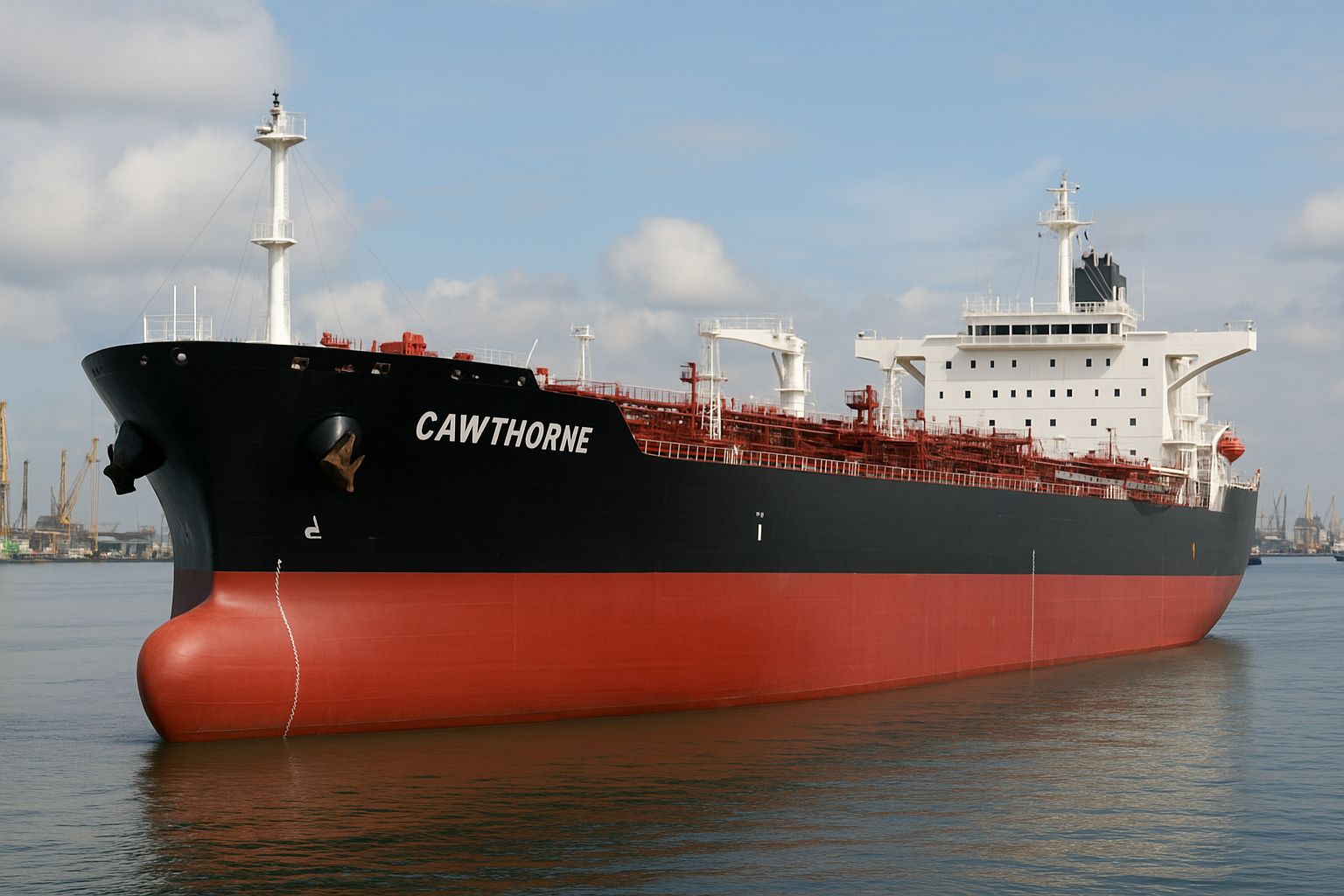

Nigeria’s oil and gas sector is undergoing a profound transformation, characterized by strategic pivots designed to stabilize crude oil production and rapidly expand gas export capacity. At the forefront of this effort is the deployment of the FSO Cawthorne, a Floating Storage and Offloading vessel that represents a critical infrastructure response to years of debilitating pipeline insecurity and production volatility.
The FSO Cawthorne, a converted Very Large Crude Carrier (VLCC) built in 2004, is Nigeria’s first wholly owned FSO vessel and, remarkably, the first new crude oil terminal commissioned in the country in 50 years. With a substantial storage capacity of 2.2 million barrels of crude oil, its significance cannot be overstated. By enabling direct offshore loading, the FSO Cawthorne effectively bypasses the high-risk network of onshore and shallow-water pipelines, which have long been compromised by theft and vandalism. These illegal activities caused the national oil industry to lose around 200,000 barrels per day (bpd) in 2022, a crisis that the FSO is specifically designed to mitigate.
This new floating terminal serves as a vital buffer against export delays. For the OML 18 field, the FSO’s capacity equates to approximately 44 days of production at its 50,000 bpd target for 2025. Furthermore, its massive storage can hold about 1.7 days of Nigeria’s total 2024 average daily crude output (which stood at 1.32 million bpd). Its positioning offshore also addresses logistical failures like siltation at riverine berths and is expected to reduce “carbon exposure” by minimizing the need for multiple barge movements. The FSO Cawthorne, therefore, represents a major step towards securing the country’s oil exports and stabilizing revenue flows.
Production Recovery and Volatility
The introduction of secure infrastructure is timely, as Nigeria’s crude output remains susceptible to volatility. Despite a year-to-date average production of 1.66 million bpd for crude and condensates between January and September 2025—indicating a gradual recovery toward the 2.02 million bpd target in the 2025 budget—short-term dips can be severe. A clear example is the three-day strike by the Petroleum and Natural Gas Senior Staff Association of Nigeria (PENGASSAN) in September 2025. This labor dispute led to an estimated 16% loss of national oil production, resulting in the deferment of about 283,000 bpd of oil and 1.7 billion standard cubic feet of gas daily.
Even with the September 2025 average crude and condensate output at 1.58 million bpd (comprising 1.39 million bpd of crude oil), which placed the crude portion just under the OPEC quota of 1.5 million bpd, the vulnerability of the onshore system is a persistent threat that the new FSO Cawthorne helps to offset.
The Pivotal Role of Gas in Shell’s Strategy
Complementing Nigeria’s push for oil security is a strategic shift towards integrated gas projects, spearheaded by major international players. Shell has reaffirmed its confidence in Nigeria’s gas sector by announcing a 2 billion Final Investment Decision (FID) for the HI gas project in OML 144 (shallow offshore), where it holds a 40% stake. This decision follows two other major FIDs in the past 18 months (Ubeta and Bonga North) and signals confidence in the country’s new competitive fiscal framework under the Petroleum Industry Act (PIA).
The HI project is a game-changer for Nigeria’s gas industry. Expected to supply 350 million standard cubic feet of gas per day (mmscf/d) at peak production before 2030, it will contribute nearly one-third of the feedgas required for the Nigeria LNG (NLNG) Train 7 project. This is crucial for NLNG, which is adding 7.7 million tonnes per year, a 35% increase to its existing 22 million metric tons per annum (MTPA) capacity. The HI project, along with Ubeta, will supply up to 15% of the total feedgas across all of NLNG’s Trains 1-7. Shell’s focus on deepwater and integrated gas, as it exits Nigerian onshore operations, aligns with its global strategy to grow its LNG volumes by 4−5% per year until 2030, firmly positioning Nigeria’s vast gas reserves at the center of its global energy future.