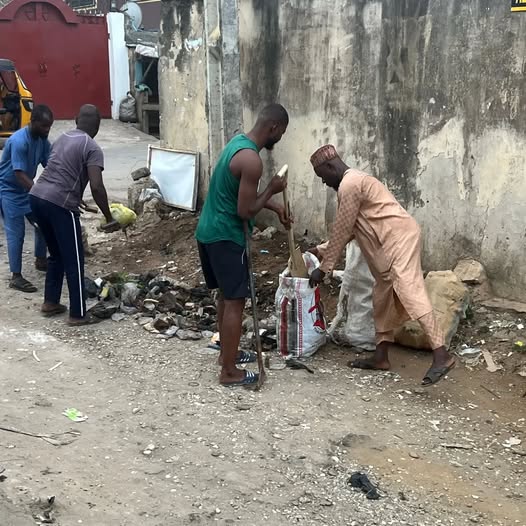

Some residents of Lagos have commended the reintroduction of the monthly environmental sanitation exercise but called for a review of the timeframe to enable wider participation. The Lagos State Government reinstated the exercise effective April 25, mandating residents to clean their surroundings, including drainages and adjoining streets, on the last Saturday of every month between 6.30 a.m. and 8.30 a.m.
A News Agency of Nigeria correspondent who monitored the exercise in Oke-Afa reported no vehicle movement, with residents mostly chatting and drinking in groups, while a few cleaned their shops and surroundings. Shops remained locked during the exercise with business activities suspended. A trader at Balogun Market, Mr Micheal Adindu, described the initiative as a welcome development but said the timing was too early for many traders to participate. “If the time can be reviewed, perhaps starting from 8.30 a.m., it will enable more people to participate properly,” he said.
Other residents suggested extending the duration beyond two hours to allow thorough cleaning. Mrs Titilayo Akinjopo said the two-hour window was insufficient, noting that even the previous 8 a.m. to 10 a.m. schedule was not enough considering the level of dirt. Some residents also criticised inadequate sensitisation and low compliance. In contrast, the Lagos State Attorney-General, Mr Lawal Pedro (SAN), clarified that the exercise does not violate residents’ right to freedom of movement, citing a subsisting Court of Appeal judgment from November 2021 that validated the state’s authority to restrict movement during sanitation periods.
From an economic perspective, the sanitation exercise imposes short-term costs on businesses through suspended operations but delivers long-term benefits including reduced flooding, lower public health expenditure, and improved living standards. The state government’s ability to balance enforcement with public convenience will determine voluntary compliance rates. The Lagos tax model, which has driven significant infrastructure investment, depends on a healthy and productive workforce, making environmental hygiene a foundational economic issue.