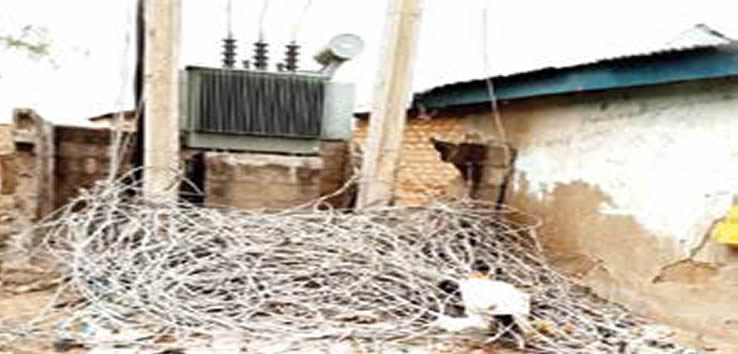

Residents of Bogodo and Janruwa communities in Chikun Local Government Area, Kaduna State, have lamented 16 months of lack of electricity supply due to faulty transformers. The residents spoke in separate interviews with the News Agency of Nigeria on Saturday, stating that they have recorded huge losses in income following the prolonged blackout.
Mr Titus Yuhana, a resident, said the community, with about 4,000 inhabitants, had remained in darkness for 16 months, affecting small businesses and daily income of households. “We want to appeal to the government to come to the aid of the Bagodo community and assist us, particularly in putting our transformer in order,” he said. Another resident, Mr Ezekiel Oludare, Chairman of the Janruwa transformer committee, confirmed the community had been in total darkness throughout last year and spanning 16 months now.
Mr Samuel Gbabofe said the community had made efforts about four different times to repair the transformer but to no avail. “We have written to Kaduna Electric and we take permission from them to try to repair the transformer but to no avail. Right now, even those retailers selling, doing minor businesses like barbing saloons and retail shops are finding it hard,” he said. The Deputy Director of Kaduna Electric, Sadiq Muhammad, had during a live radio programme in February committed to providing transformers in the communities, but residents say more than two months later, no new transformer has been received.
From an economic perspective, prolonged power outages impose severe costs on small businesses and households. Without electricity, local shops cannot operate refrigeration, mobile phone charging services become unavailable, and evening economic activities cease. The 4,000 inhabitants represent a cluster of entrepreneurs whose productivity is directly linked to reliable power supply. The Kaduna Electric distribution company’s failure to honour its commitment highlights broader challenges in Nigeria’s power sector, where distribution companies often cite liquidity constraints while consumers bear the cost of service failure. The situation underscores the need for stronger regulatory enforcement and alternative power solutions for off-grid communities.