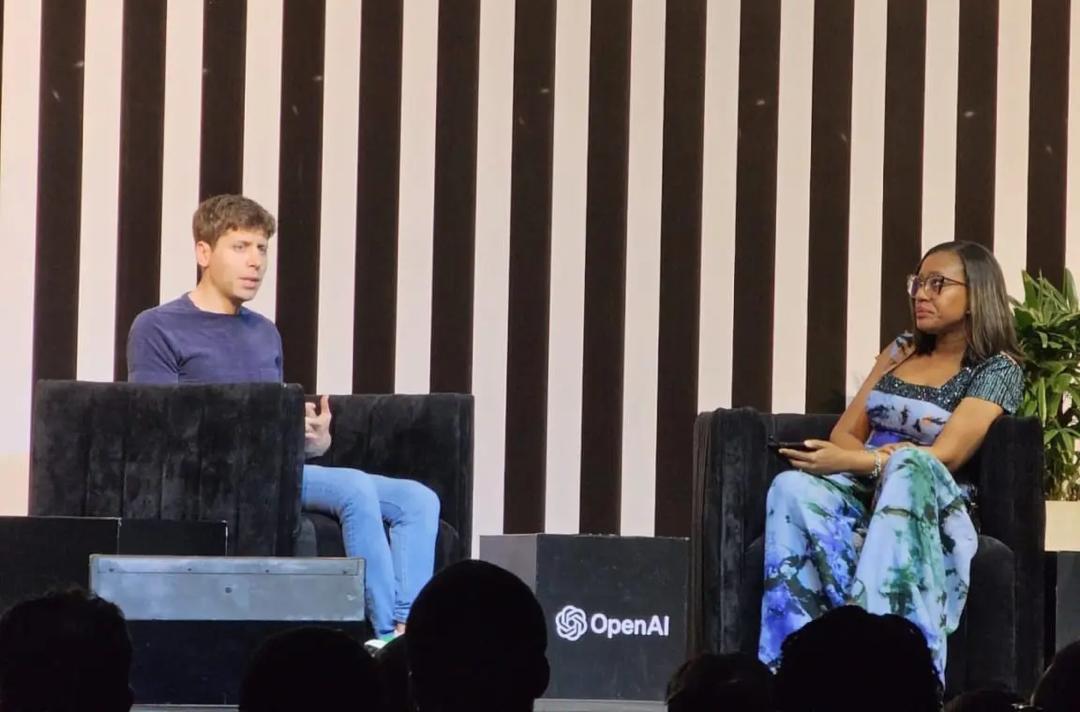

The global Artificial Intelligence (AI) landscape shifted this week as the University of Lagos (UNILAG) was officially unveiled as the host of the first-ever OpenAI Academy in Africa. The launch, which took place during UNILAG’s 2025 International Week, marked a pivotal moment for Nigeria’s technology ecosystem, translating the momentum from OpenAI CEO Sam Altman’s 2023 visit into a concrete strategic partnership.
The establishment of the OpenAI Academy, created by the developers of the ubiquitous ChatGPT, is designed to equip students, researchers, and innovators with world-class AI skills tailored explicitly to African realities.
OpenAI’s Africa Lead, Emmanuel Lubanzadio, confirmed the partnership, stating that the academy will train participants on how to use and build with AI tools. He premised the decision to choose UNILAG on the institution’s profile as a “continental powerhouse in Artificial Intelligence and other emerging technologies”.
“We’re here to democratise access to intelligence,” Lubanzadio said, adding that the academy aims to transform classrooms, start-ups, and communities, and will serve as a blueprint for similar initiatives across Africa.
The launch of the academy fulfills the high expectations set during Sam Altman’s May 2023 visit to Lagos, the only African city on his 17-city global listening tour. Altman, who was then at the forefront of the impending AI revolution, met with tech executives, students, and government officials, including the Lagos State Governor, Babajide Sanwo-Olu.
During his interactive sessions at places like the MUSON Centre, Altman encouraged local developers and shared his insights on how AI could enhance productivity and inspire new startups in the region. His visit highlighted Nigeria’s position as Africa’s most active tech hub, where developers were already building notable generative AI-powered applications. The academy’s creation confirms that the foundational discussions held during that tour have now matured into a major institutional commitment.
The Vice-Chancellor of UNILAG, Professor Folasade Ogunsola, hailed the partnership as a major leap in the university’s drive to advance equitable technology collaboration. “Artificial Intelligence is not the future; it is the present. For Africa, AI offers a chance to leapfrog systemic challenges… and create solutions that fit our context,” she stated.
The theme of the International Week, “Equitable Partnerships and the Future of AI in Africa,” underscored the Nigerian approach, with Prof. Ogunsola stressing that partnerships must be “rooted not in charity, but in shared growth, mutual respect, and co-creation”.
The potential for local innovation was showcased by a UNILAG final-year Applied Physics student, Adeleke Eniola, who created RiaScope—an AI-powered diagnostic tool designed to affordably detect malaria in low-resource communities. Such innovations, which succeed under unique local constraints, tend to have global relevance, according to the university’s Director of International Relations, Partnership and Prospects, Professor Ismail Ibraheem.
The Ministers of Education and Communications, among other dignitaries, sent representatives to commend UNILAG for leading Nigeria’s active participation in the global knowledge economy, signaling strong government support for the initiative. The Academy will now focus its initial workshops on applying AI in education, journalism, public service, and the creative industries.