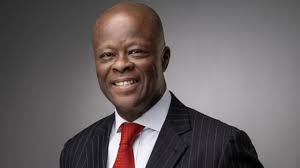

The removal of Wale Edun as Minister of Finance and Coordinating Minister of the Economy marks the end of a long political journey for one of President Bola Tinubu’s closest and most trusted allies. Edun was part of the tight-knit circle that defined the political machinery of Tinubu, a group of men who were not mere associates but trusted allies, confidants, and architects of a political legacy shaped in Lagos. Each was appointed commissioner when Tinubu became governor of Lagos in 1999, operating at the very heart of power.
When Tinubu was elected President, he named Edun Head of the Presidential Transition Council, and Edun made the list of his first set of appointees, first as Special Adviser, then as Minister. Tinubu himself opened up that the sacked Minister made contributions to his inauguration speech as President. Addressing an audience of Nigerians in France, the President had said, “Wale Edun and co started debating, putting my speech together without the question on subsidy. I got to the podium, I was possessed with courage and I said subsidy is gone”.
However, signs that Edun’s influence was waning began manifesting before Tinubu’s mid-term. Sources said Edun was among those pencilled for exit during the first cabinet reshuffle, but a well-respected voice in the kitchen cabinet created a soft landing. But cracks continued to manifest as both men started to sing in discordant tunes. While President Tinubu repeatedly projected optimism about Nigeria’s fiscal outlook, Edun’s public statements occasionally struck a more cautious tone, particularly around fiscal sustainability and debt exposure.
Edun has, in multiple forums, emphasized prudence in borrowing and warned against excessive debt accumulation, a stance that appears to contrast with the administration’s increasing reliance on loans to fund budget deficits and infrastructure expansion. There are insinuations that Edun’s apparent reluctance toward extensive borrowing may have placed him at odds with broader government priorities, especially in a system where political imperatives often demand rapid results. One of the most telling moments came in late 2025, when Edun publicly indicated that the federal government was facing a significant revenue shortfall, noting that only a fraction of projected revenue had been realised. He attributed the shortfall largely to weak oil and gas revenues.
Their relationship continued drifting to the extent the president quietly clipped Edun’s wings, transferring key responsibilities to then Minister of State for Finance, Doris Uzoka-Anite. At the launch of the new complex of Nigeria Revenue Service last week, Tinubu praised Edun’s successor, Taiwo Oyedele, without making any utterance about his estranged ally. Unlike other ministers whom Tinubu gave a sort of dignified exit through resignation, Edun was fired out. An inner source said the sack letter was prepared on Edun’s 70th birthday, 20th April, 2026, but higher forces prevailed on the authorities to deliver it a day after.