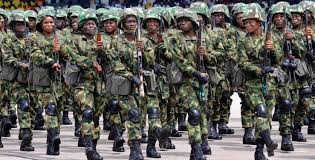

Over the past fifteen years, the federal government has poured over N32.88 trillion into defence and security, representing about 12.5 per cent of total government expenditure across that period. The 2025 allocation alone reached a record N6.57 trillion, yet Nigerians are being kidnapped in record numbers, Boko Haram is resurging, and American airstrikes are hitting targets on Nigerian soil. The gap between what Nigeria spends on paper and what it delivers in practice has become one of the country’s most damning broken promises.
The numbers show an escalating commitment that has failed to translate into outcomes. Defence and security allocations climbed steadily from N2.41 trillion in 2022 and N2.9 trillion in 2023 to N3.85 trillion in 2024 and N6.57 trillion in 2025 before the N5.41 trillion proposed for 2026. Yet the country continues to battle insurgency in the North-East, banditry in the North-West, violent attacks in the North-Central region, oil theft in the Niger Delta, and maritime insecurity in the Gulf of Guinea. In dollar terms, the N32.88 trillion spent over 15 years is roughly $44 billion more than the annual GDP of many African nations.
The implementation crisis is even more damning. Of the N20.56 billion budgeted by the Nigerian Army for the purchase of security equipment in 2025, only N1.46 billion, representing just 7.11 per cent, was disbursed as of December 31, 2025. Senate Committee on Defence Chairman Ahmed Lawan stated bluntly: “You cannot postpone the implementation of the defence budget because that gives an edge to the enemy”. The crisis extends to basic welfare, with the Minister of State for Defence revealing non-payment of group life insurance for soldiers killed in action and requesting an additional N20 billion for payment to families of deceased personnel.
Corruption remains deeply embedded across Nigeria’s defence sector. According to the 2025 Government Defence Integrity Index, Nigeria remains at high to critical risk of defence corruption, with military operations recording the lowest scores of any risk area in Sub-Saharan Africa, with a regional average of just 12 out of 100. A particularly alarming irregularity emerged in 2025 when the Office of the National Security Adviser reported a capital budget utilization of 314.59 per cent, having received N228.16 billion against an appropriation of N72.52 billion.
The consequences of this spending-without-delivery are written in blood. Over 2,266 people were killed by bandits or insurgents in the first half of 2025 alone. In November, at least 402 people mostly schoolchildren were kidnapped across four states in the north-central region, surpassing the 2014 kidnapping of the Chibok girls. The situation deteriorated to the point where U.S. Africa Command conducted airstrikes in Sokoto State against ISIS-affiliated targets on December 25, 2025.