
In Phalaborwa, a town in South Africa’s Limpopo province, a U.S.-backed project is exploring how to extract rare earth elements from massive mining waste piles, marking a shift in how critical minerals are sourced. The Phalaborwa Rare Earths Project, supported by a $50 million investment from the U.S. International Development Finance Corporation, aims to reduce Western reliance on China for key materials used in electric vehicles, defence systems, and renewable energy technologies.
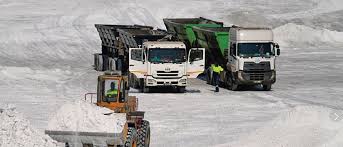
Developed by Rainbow Rare Earths, the project plans to extract elements from 35 million tons of industrial waste left over from decades of phosphate mining. Production is expected to begin by 2028, with a planned 16-year lifespan. Despite diplomatic tensions between the United States and South Africa, the project has continued, highlighting its strategic importance to both nations. Analysts say it could offer a lower-cost alternative to traditional mining, as the waste material has already been excavated and crushed, reducing extraction costs and environmental impact.
From a global supply chain perspective, the project addresses a critical vulnerability: China currently dominates rare earth processing, accounting for roughly 70 per cent of global production. Diversifying supply sources is a priority for Western governments seeking to secure materials for defence and green technologies. The Phalaborwa project, if successful, could position South Africa as a significant player in the rare earth market, creating export opportunities and generating tax revenues.
The project also offers environmental benefits by reprocessing legacy waste, reducing the footprint of historical mining activities. For local communities, it promises jobs and economic activity. However, the technology required to separate rare earth elements is complex and capital-intensive, and market prices remain volatile. The DFC investment provides a financial backstop, but long-term viability will depend on operational execution and sustained demand. Nevertheless, the project represents a creative approach to resource extraction that could serve as a model for other mining regions across Africa.