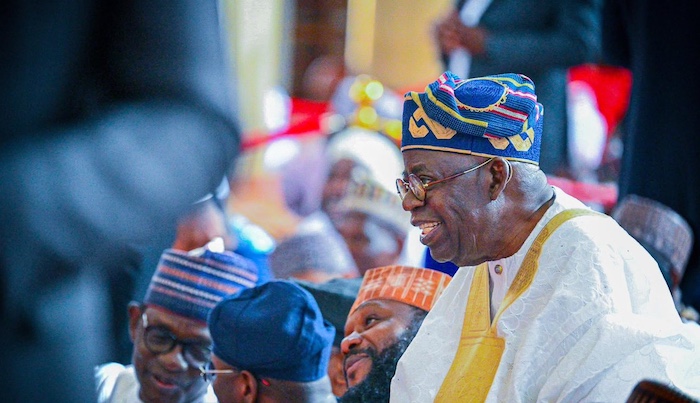

President Bola Tinubu has directed the Ministers of Finance and Budget, alongside the Head of the Civil Service, to formulate urgent policy measures to mitigate the economic impact of the escalating US-Israel-Iran conflict on Nigerian citizens. Speaking in Yenagoa, Bayelsa State, the President acknowledged that the “fuel prices are biting hard” as global energy markets react to the instability in the Middle East. For the Nigerian economy, this directive signals a pivot toward defensive fiscal management, as the administration seeks to protect domestic consumption and industrial productivity from the inflationary “transmission” of global geopolitical shocks.
The primary economic risk of the conflict is the upward pressure on global crude prices, which paradoxically strains Nigeria’s fiscal position due to its continued reliance on imported refined petroleum. While higher oil prices technically boost government revenue, the corresponding rise in the landed cost of petrol exacerbates the “subsidy dilemma,” forcing the government to choose between further price hikes at the pump or increased fiscal deficits. President Tinubu’s directive to “look at the numbers” suggests a data-driven approach to identifying targeted interventions for vulnerable populations, potentially including expanded social safety nets or fiscal incentives for the transport sector to prevent a total collapse in consumer purchasing power.
Beyond immediate relief, the President highlighted energy sufficiency as a core pillar of national resilience. During his visit to Bayelsa, he commissioned a 60-megawatt gas-fired power project, noting that “development advances further, faster when the federal government and the state government work in partnership”. This focus on independent power plants (IPPs) and domestic gas utilisation is a strategic attempt to de-risk the Nigerian economy from global energy shocks. By building internal capacity to generate power using domestic gas reserves, Nigeria can reduce its vulnerability to international oil price fluctuations and provide the stable energy required for local manufacturing.
However, the sovereign risk associated with the administration’s reforms remains a concern for global markets. The President appealed for patience, arguing that despite the hardship, Nigeria remains in a better position than some of its regional peers. For investors, the government’s ability to implement these mitigation policies without reversing the gains of recent market-driven reforms—such as the unification of the exchange rate—is a critical test of institutional integrity. The administration must balance the political necessity of alleviating citizen suffering with the fiscal discipline required to maintain international creditworthiness.
As the implementation committee begins its work, the focus will be on the speed and transparency of these interventions. The “Renewed Hope” agenda faces a significant stress test as external geopolitical factors collide with domestic inflationary pressures. The administration’s success in navigating this crisis will depend on its ability to transform these temporary mitigation measures into structural improvements in the nation’s energy and logistics frameworks, ensuring that future global conflicts do not result in such immediate and severe shocks to the domestic economy.