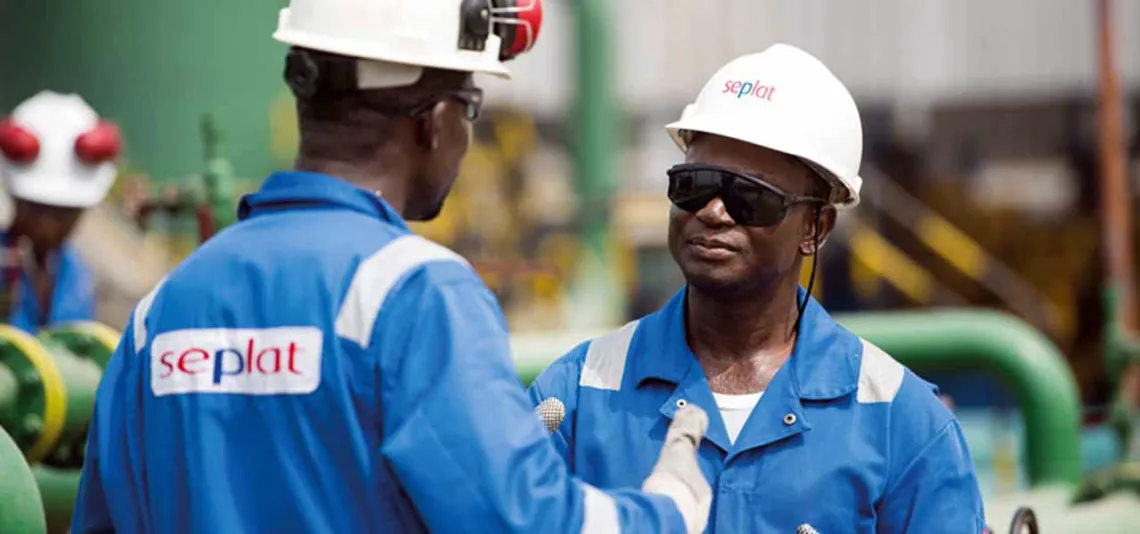

Workers at Seplat Energy have suspended the strike action they embarked upon on Friday amid concerns over pay increases, following renewed negotiations and written assurances from the company. The Petroleum and Natural Gas Senior Staff Association of Nigeria announced the suspension on Saturday after the company provided written commitments on pay-related issues, bringing relief to operators and regulators concerned about potential disruptions to oil and gas output.
In a letter dated 4 April to Seplat’s Chief Executive Officer, Roger Brown, PENGASSAN said it had directed its members to immediately suspend the industrial action after negotiations resumed with the Nigerian National Petroleum Company Limited. The union said discussions on the 2026 collective bargaining agreement would continue, with a target to resolve outstanding issues by 13 April. Details of the workers’ demands remain unclear, but the swift resolution suggests that both parties found sufficient common ground to return to the negotiating table.
“We can confirm that the union has suspended its notice of industrial action to allow negotiations to conclude on outstanding items within an agreed framework,” Seplat spokesperson, Ogechukwu Udeagha, was quoted as saying. “Operations are recommencing at our various locations,” he added. The resumption of operations will be welcomed by the government, which has been seeking to maximise production amid fluctuating global oil prices linked to the Middle East crisis.
From an economic perspective, the swift resolution of the strike prevented what could have been a significant disruption to Nigeria’s oil and gas production. Seplat accounts for approximately 7 to 9 per cent of Nigeria’s total liquids output, meaning any prolonged work stoppage would have affected national production figures at a time when the government is seeking to maximise revenue from elevated global prices. The company is targeting production of up to 155,000 barrels of oil equivalent per day this year, up from an average of 131,506 boepd recorded in 2025.
The strike also had implications for Nigeria’s power sector. Seplat is a major supplier of gas to power generation companies across the country, and any sustained disruption to its gas production could have strained electricity supply nationwide. The suspension of the strike means that gas flows to power plants can continue uninterrupted, supporting the generation of electricity for households and businesses.
The industrial action came despite the company’s strong operational performance in 2025. Seplat reported a 150.4 per cent increase in revenue to N4 trillion, driven by expanded output and its first full year of offshore operations. Average daily production rose by 148 per cent to 131,506 boepd, accounting for roughly 7 to 9 per cent of Nigeria’s total liquids output. Onshore production also increased by 14 per cent, supported by upgrades to the Sapele Gas Plant, which raised processing capacity to 90 million standard cubic feet per day.
Despite the revenue growth, profit expansion was constrained by rising costs, including higher tax obligations. This tension between strong top-line performance and constrained profit growth may have been a factor in the workers’ demands, as employees at profitable companies often expect to share in that prosperity through improved compensation packages. The resolution framework, which includes continued negotiations on the 2026 collective bargaining agreement with a target date of 13 April, suggests that the parties have agreed on interim measures while working toward a comprehensive agreement.
The involvement of the Nigerian National Petroleum Company Limited in the negotiations is noteworthy. As the state-owned oil company and a key partner in many of Seplat’s operations, NNPC has a vested interest in ensuring industrial harmony across the sector. Its intervention may have helped bridge gaps between the company and the union, providing a neutral perspective or applying pressure on both sides to reach a resolution. The government’s broader interest in maintaining production levels during a period of favourable global prices would have added weight to NNPC’s engagement.
The suspension of the strike also averts potential reputational damage for Seplat. The company is dual listed in Lagos and London, and sustained industrial action could have affected investor confidence and share price performance. The swift resolution demonstrates the company’s responsiveness to worker concerns and its commitment to maintaining operational stability, both of which are positive signals to the investment community.
For the workers, the suspension with written assurances from the company provides a foundation for continued negotiations. The 13 April target for resolving outstanding issues suggests that both parties are motivated to reach a comprehensive agreement without further disruption. The union’s willingness to suspend the strike after receiving written commitments indicates that the assurances were sufficiently concrete to justify returning to work.
The broader lesson from this episode concerns the importance of effective communication and mediation in resolving industrial disputes. The strike lasted only one day before the parties, with NNPC’s assistance, found a path forward. This suggests that the underlying issues, while significant enough to prompt a work stoppage, were not intractable. For the oil and gas sector, where continuous operations are essential for safety and efficiency, the swift resolution is a positive outcome.