
Across Nigeria, weeks of worsening power outages have pushed millions into a daily reality shaped by uncertainty and mounting economic distress. Freezers thaw, shops shutter early, and entire neighbourhoods fall silent under a grid that has once again failed to deliver. As generation plummets to barely 2,908 megawatts—far below the threshold needed to power a population exceeding 200 million—the gap between installed capacity and actual output has become a chasm that swallows livelihoods and erodes the very foundations of public trust. When Power Minister Bayo Adelabu stepped forward to apologise and promise a turnaround within two weeks, the announcement that should have offered reassurance was instead met with widespread doubt, reflecting how deeply confidence has eroded after years of repeated promises with little visible change.
Nigeria’s electricity paradox remains stark. With installed generation capacity exceeding 12,000 megawatts, actual output frequently falls below 4,000 megawatts—a fraction of the estimated 30,000 megawatts needed to sustain meaningful economic growth and industrialisation. By late March 2026, up to 16 power plants had gone offline, often due to inadequate gas supply, a persistent bottleneck given that gas accounts for roughly 70 per cent of Nigeria’s electricity mix. The system’s fragility was underscored in January when the national grid suffered its first total failure of the year, a grim reminder that transmission and distribution infrastructure remain structurally vulnerable despite years of investment.

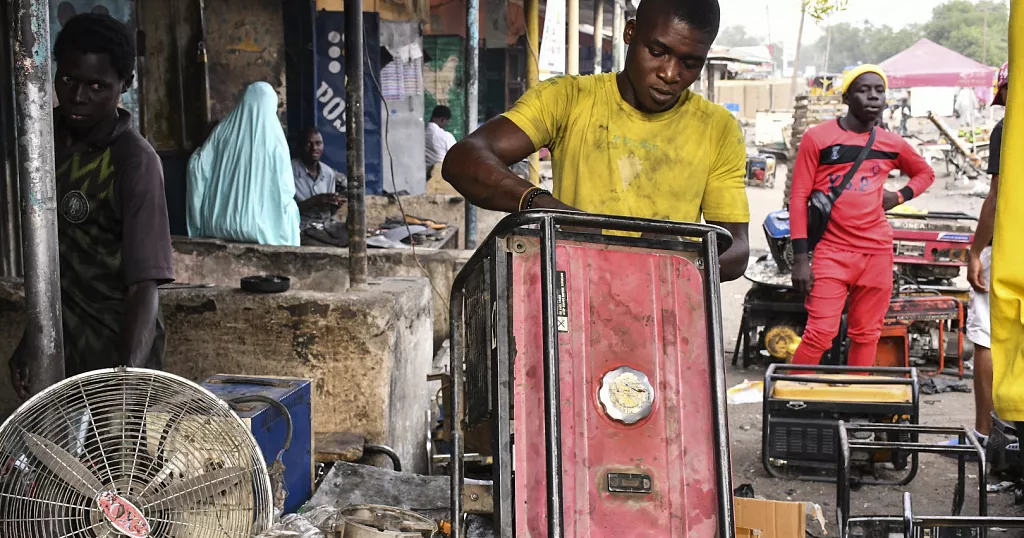
The economic toll is staggering. Industry reports estimate Nigeria loses approximately ₦40 trillion ($29 billion) annually to poor electricity supply, as businesses and households are forced to rely on expensive, fossil-fuel-based self-generation. Small business owners, the backbone of the informal economy, bear the brunt. Mrs Victoria Alizi, a sachet water trader, told The Nigerian Observer on March 25, “Before now, I bought ice blocks for between N500 and N700, but the price has surged to as high as N1,500.” Mr Simon Boss, an ice block producer, added, “We are feeling the impact… some of us are recording losses due to partially frozen or melted products.” Their experiences reflect a broader crisis where rising operational costs erode margins, force layoffs, and push enterprises to the brink of collapse.
For millions, the alternatives have become unaffordable. Petrol prices hover around N1,400 per litre, while diesel has climbed above N1,800, placing generator use beyond the reach of many households and small businesses. Solar power, while offering a long-term solution, remains prohibitively expensive for most Nigerians, with upfront costs that exceed the savings capacity of average households. A Minna resident captured the sentiment of many when speaking to Daily Post on March 28: “You cannot expect people to pay for what they don’t get… solar is good, but it is expensive. Many of us cannot afford it.” This leaves millions trapped between an unreliable grid and unaffordable alternatives, forced to curtail economic activity and adjust daily routines around sporadic supply.
Frustration is increasingly spilling into confrontation. Viral videos show residents physically blocking electricity distribution company officials from disconnecting their supply, arguing it is unjust to penalise consumers for services never provided. In one video, a group of women formed a human shield around the ladder brought by officials, accusing the company of failing to provide electricity for months. In another, an enraged man confronted officials, demanding power be restored before any discussion of disconnection. These moments capture a deeper shift from quiet frustration to visible resistance, rooted in a sense that the system has become fundamentally unfair.
At the centre of public anger is the controversial banding system, which classifies consumers based on expected hours of supply. While Band A customers are promised up to 20 hours daily, lower bands receive significantly less—yet many report little to no power while still facing rising bills and the threat of disconnection. For unmetered customers, the system feels less like a framework for fairness and more like a hierarchy of access that penalises those already underserved.
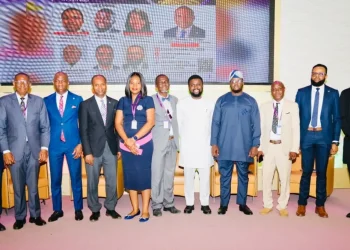
Amidst this turbulence, government officials continue to project optimism. Minister Adelabu, during an Eid-el-Fitr message on March 20, urged patience, stating, “The reforms initiated by President Bola Tinubu are beginning to take root, and Nigerians will soon witness the full benefits.” At the March 26 commissioning of the new Nigeria Electricity Liability Management Company headquarters, he framed the event as “more than the unveiling of a building; it represents a reinforcement of the institutional framework.” Vice President Kashim Shettima, at the same event, declared, “Energy security is the ultimate foundation upon which national progress must stand.” The Nigerian Independent System Operator, in a March 27 industry report, added, “A stable national grid unlocks economic growth, industrial productivity, and job creation.”
Yet, for many citizens, official rhetoric struggles to reconcile with the reality of prolonged blackouts. Omoyele Sowore captured a growing scepticism in a March 17 post on X: “Soldiers are being used to protect private property rather than focusing on national security… this is a case of misplaced priorities.” Dr Musa Bulus, an energy expert, offered a more measured assessment to Daily Post on March 28: “Decentralised energy like solar is part of the future, but presenting it as a replacement rather than a supplement raises serious equity concerns.” Gabriel Ewepu, writing in Vanguard News on March 23, reflected on the lasting psychological toll, noting, “Whether the scar in the minds of these [citizens] will ever heal is left to time to unravel.”
The current crisis has also revived memories of a campaign promise made by President Bola Tinubu before his election: “By all means necessary, you must have electricity and you will not pay for estimated bill anymore.” He tied the pledge to electoral accountability, stating that if he could not keep the promise, voters should not return him for a second term. Today, for Nigerians navigating long nights without power, that promise feels increasingly distant. As the government renews its pledges and consumers brace for another uncertain wait, the lights remain off, and in the darkness, trust continues to flicker.