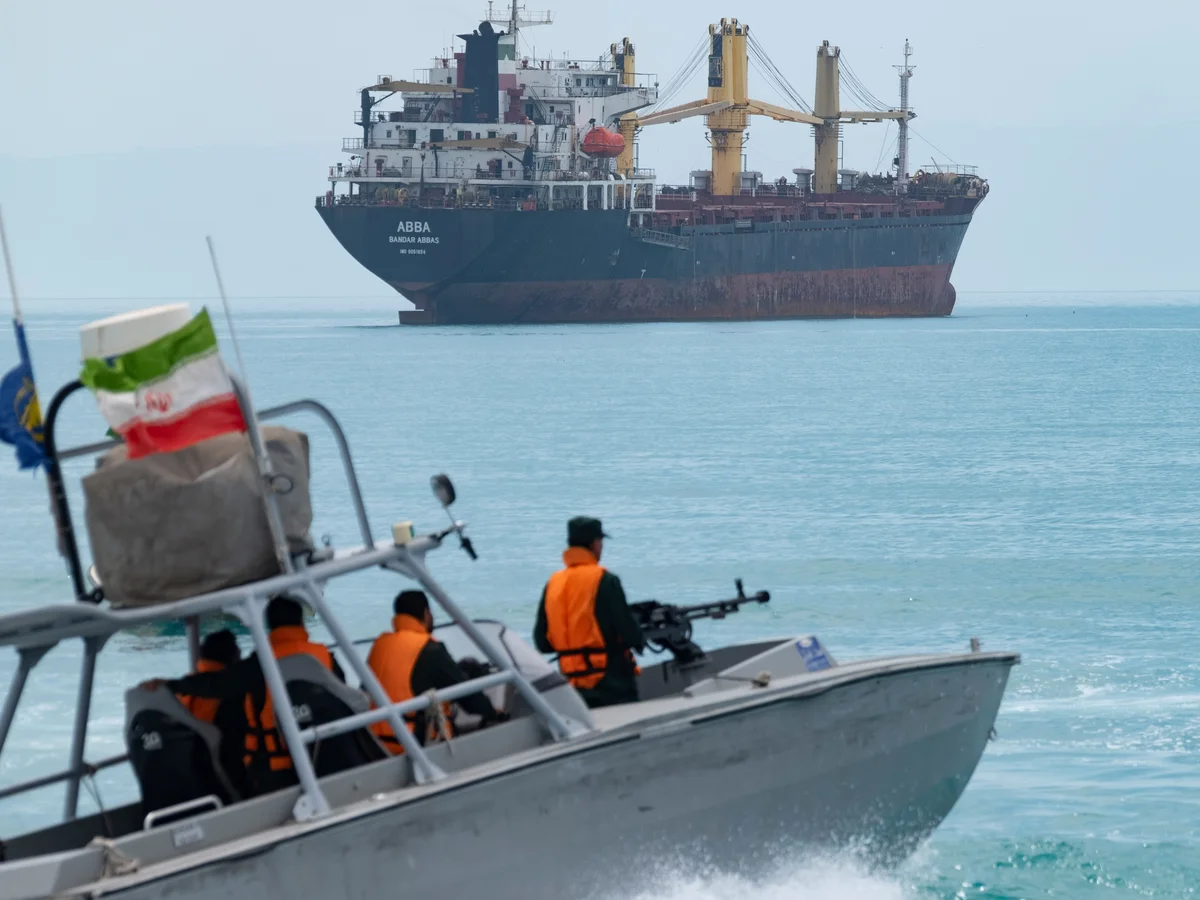

Iran has declared that vessels belonging to non-hostile states may transit the Strait of Hormuz only under conditions determined by Iranian authorities, while explicitly excluding vessels linked to the United States and Israel from safe passage protections. The statement, issued on March 22 and circulated by the International Maritime Organisation (IMO) at Iran’s request, establishes a framework that effectively politicises maritime navigation through one of the world’s most critical oil transit chokepoints. For global energy markets and the shipping industry, the declaration introduces new layers of uncertainty and risk at a time when supply chains are already navigating geopolitical tensions.
The Strait of Hormuz, through which approximately one-fifth of global petroleum consumption passes, has long been a flashpoint for regional tensions. Iran’s latest statement conditions safe passage on coordination with Iranian authorities, compliance with declared safety regulations, and the absence of participation in or support for acts of aggression against Iran. The vagueness of these criteria creates ambiguity for shipping lines, insurers, and oil traders who must assess whether their vessels and cargoes qualify for protection. The explicit exclusion of US and Israeli-linked assets signals that Iran intends to treat maritime traffic as an extension of its broader regional conflict.
From a global energy security perspective, the statement threatens to disrupt the relatively stable flow of oil through the strait that has persisted despite periodic incidents. Any incident affecting tanker traffic can quickly translate into higher oil prices, as traders price in supply disruption risk. For Nigeria, a major oil exporter that relies on global price stability for its fiscal revenues, sustained tensions in the strait have mixed implications: higher oil prices boost government revenue but also increase import costs for refined products and contribute to inflationary pressures. The volatility introduced by such geopolitical risks complicates fiscal planning for oil-dependent economies.
The shipping industry faces immediate practical challenges. Marine insurers typically require clarity on navigational risks to underwrite vessels transiting high-risk areas. The Iranian statement’s case-by-case approach to safe passage, combined with the threat that US and Israeli-linked assets “will be handled in accordance with decisions and measures adopted by the competent authorities,” creates underwriting uncertainty that could increase insurance premiums or reduce the availability of coverage for strait transits. Higher shipping costs ultimately feed into delivered oil prices, affecting consumers worldwide.
Iran’s framing of its measures as “precautionary” and consistent with its right to self-defence reflects an effort to ground its actions in international legal justification. The statement asserts that the Strait of Hormuz remains open and maritime traffic continues, subject to compliance with Iranian requirements. However, the assertion that “vessels, equipment and all types of assets belonging to the United States and Israel, as well as those involved in acts of aggression, do not qualify for innocent or non-hostile passage” represents a significant departure from the principle of freedom of navigation that has underpinned global maritime trade for decades.
The IMO’s circulation of the statement to all member states indicates that Iran sought to formalise its position within the international maritime framework. For other nations, particularly those with naval vessels or commercial shipping transiting the region, the statement demands a response. The United States and its allies have historically conducted freedom of navigation operations in the strait to challenge unilateral restrictions on passage. The current Iranian declaration may prompt renewed naval deployments and increased military presence, further raising the risk of confrontation.
For African nations that depend on imported refined petroleum products, including Nigeria and many other West African countries, sustained disruptions to Persian Gulf shipping would have direct consequences. The region supplies a significant share of the refined products that African markets consume, and any prolonged disruption could shift trade flows, increase freight costs, and create supply shortages. The statement serves as a reminder of the vulnerability of global energy supply chains to geopolitical decisions made in a narrow waterway thousands of miles from consumer markets.