
Nigeria is facing a deepening education crisis that demands sustained financial commitment and structural reform. The Federal Government has estimated that about 345 million dollars will be required each year to return millions of children to school and equip them with basic skills.
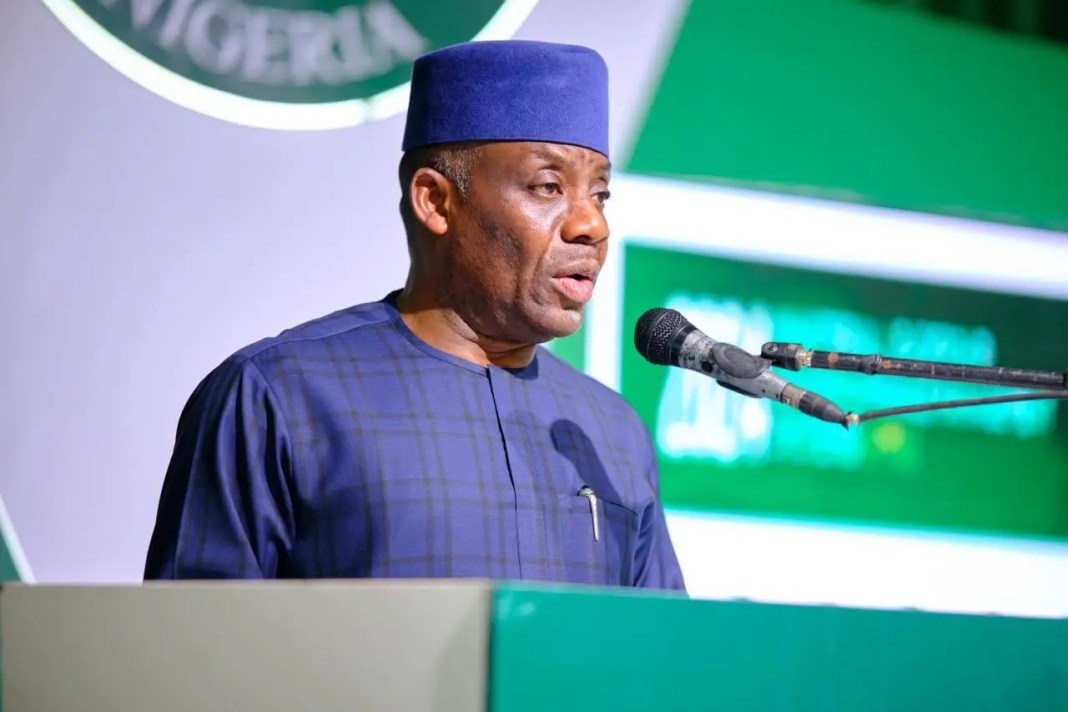
Minister of Education, Dr. Tunji Alausa, disclosed this figure during a policy engagement with private sector stakeholders in Lagos. The estimate reflects the cost of addressing the needs of roughly 15 million children currently outside the formal education system. It is a calculation grounded in per capita spending required to deliver access, learning materials, and essential support services.
The scale of the problem is significant. About a quarter of Nigerian children between the ages of five and fourteen are not enrolled in school. In some northern regions, particularly the North East and North West, the situation is more severe, with out of school rates rising to over 40 percent. This uneven distribution highlights structural inequalities and regional vulnerabilities that continue to shape access to education.
Alausa framed the challenge as both a risk and an opportunity. “The challenges in the Nigerian education sector present a marked opportunity to increase access, improve quality, and enhance systems,” he said. The statement underscores a policy direction that views education not only as a social obligation but as a strategic investment in national development.
The government has already initiated interventions under its broader education reform agenda. Funding has been directed toward technical and vocational training as a means of equipping young people with practical skills. About N10.6 billion has been allocated to training centres, while N3.4 billion has been paid directly to trainees. These efforts have attracted over one million applications, although only a fraction of applicants have been successfully enrolled so far.
Infrastructure investment has also been prioritised. More than N156 billion has been committed to upgrading tertiary institutions, including medical and engineering faculties. Additional spending has targeted laboratories, workshops, and student accommodation across dozens of institutions. These interventions aim to strengthen the education system from both access and quality perspectives.
Despite these measures, the funding gap remains substantial. The annual requirement of 345 million dollars signals that current public expenditure alone may not be sufficient. The government is therefore pushing for stronger collaboration with private sector actors and international partners to mobilise additional resources.
Education is central to the administration’s long term economic agenda, which seeks to expand the economy significantly within the next decade. However, the persistence of millions of out of school children raises concerns about future workforce readiness, productivity, and social stability.
The underlying message is clear. Without sustained investment and coordinated implementation, the education deficit will continue to widen. Addressing it requires not only funding, but also governance reforms, targeted regional interventions, and accountability in execution.