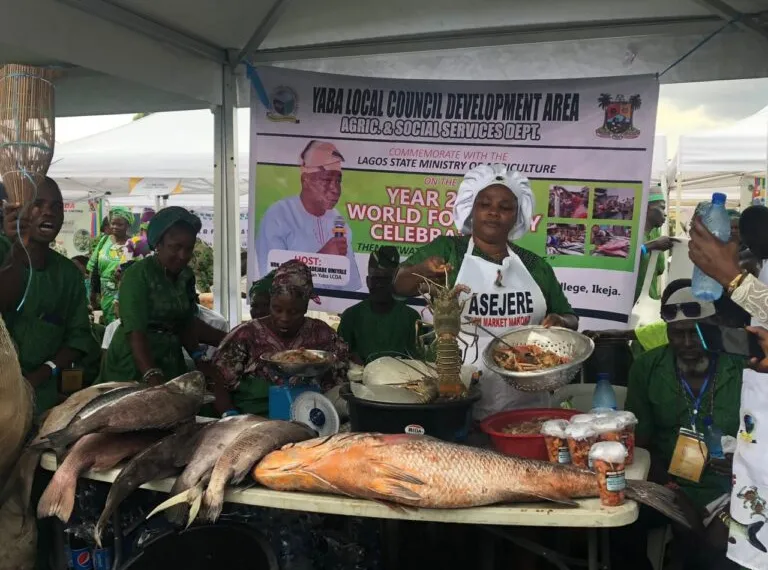

The Lagos State Government has called for increased agro-investment partnerships to strengthen the sector’s value chain, positioning the state as the premier gateway for agricultural technology and processing investment in West Africa. Governor Babajide Sanwo-Olu, represented by Commissioner for Agriculture and Food Systems Abisola Olusanya, made the appeal at the 11th Fairtrade Messe Agrofood Fair in Lagos, emphasising that the state’s food economy has more than doubled from ₦6.5 trillion in 2019 to over ₦16 trillion today. With the Netherlands serving as Guest of Honour, the exhibition brought together global stakeholders to explore opportunities in cold chain solutions, processing machinery, packaging, and smart farming technologies.
Sanwo-Olu described Lagos as Africa’s largest single food consumption market, noting that the state is the natural gateway for any serious player in agro-processing, cold chain, packaging, or food technology. “But here is the honest truth: the real bottleneck is no longer on the farm. It is everything that happens after the harvest,” he said, pointing to post-harvest losses as the critical constraint limiting the sector’s potential. The governor’s framing reflects a strategic shift from focusing solely on production to addressing the infrastructure gaps that determine how much of what is grown reaches consumers in usable form.
The economic logic behind Lagos’s push for agro-investment partnerships is compelling. With Nigeria’s food import bill running into billions of dollars annually, investments in domestic processing and cold chain infrastructure offer import substitution opportunities that conserve foreign exchange while creating local employment. For a state that consumes a significant share of the country’s food output, reducing waste and improving processing capacity translates directly into food security gains and price stability for urban consumers. The governor’s call for long-term partners rather than pilot projects signals a preference for scalable, commercially sustainable investments.
The Netherlands’ participation as Guest of Honour is significant. Dutch agriculture has achieved global recognition for productivity, innovation, and export orientation despite limited land area. Ambassador Bengt van Loosdrecht noted that the Nigerian food market is estimated at about $240 billion and growing annually, making it one of the largest food importers in the world with imports up to $300 million annually. He emphasised that every element of the Dutch agricultural transformation model is transferable to Nigeria, pointing to the combination of Dutch technology and Nigerian entrepreneurship as a formula for boosting the sector across the full depth of the value chain.
The German Ambassador to Nigeria, Daniel Krull, also affirmed his country’s interest in partnering with Nigeria’s agricultural sector, noting that Germany, known globally for its automotive industry, has become one of the largest coffee producers in the world. He highlighted ongoing investments through the Programme 20 Connect project, which supports Nigerian businesses seeking to import agricultural machinery. The presence of both European ambassadors underscores the growing international recognition of Nigeria’s agricultural potential and the willingness of foreign governments to facilitate private sector engagement.
From an investment climate perspective, the Lagos government’s active courting of agro-industry partners aligns with broader efforts to diversify Nigeria’s economy beyond oil. The state’s political will, as articulated by Sanwo-Olu, provides the policy predictability that investors require when committing capital to capital-intensive sectors like cold chain logistics and food processing. The governor’s message that Lagos is open for business, seeking genuine partners to co-create systems that work for local roads, climate, farmers, and consumers, reflects an understanding that successful agricultural transformation requires alignment between public facilitation and private execution.
The fair, organised by Fairtrade Messe in collaboration with Modion Communications, serves as a platform for matchmaking between technology providers, investors, and local enterprises. For Nigerian businesses, access to advanced cold chain and processing technologies can reduce post-harvest losses that currently erode profitability for farmers and traders. For international partners, Lagos offers a structured market with concentrated demand, reducing the transaction costs associated with serving dispersed rural populations.
As Sanwo-Olu noted, the future of food security in Nigeria will not be decided by speeches but by the systems built to cut waste, create jobs, and position the country on the global food map. The state’s call for partnerships reflects a recognition that agricultural transformation requires not only policy ambition but also sustained private capital and technical expertise.